Projects & Collectibles
Coming Sooner or Later... More Projects & Project Files...
I engage in various hobbies that I often incorporate into my photography and other creative endeavors.
In this section, I have organized my projects into three main categories:
1. Artifacts
2. Coal Mine Maps
3. Model Trains
Artifacts & Collectibles
Model Railroading O - Gauge
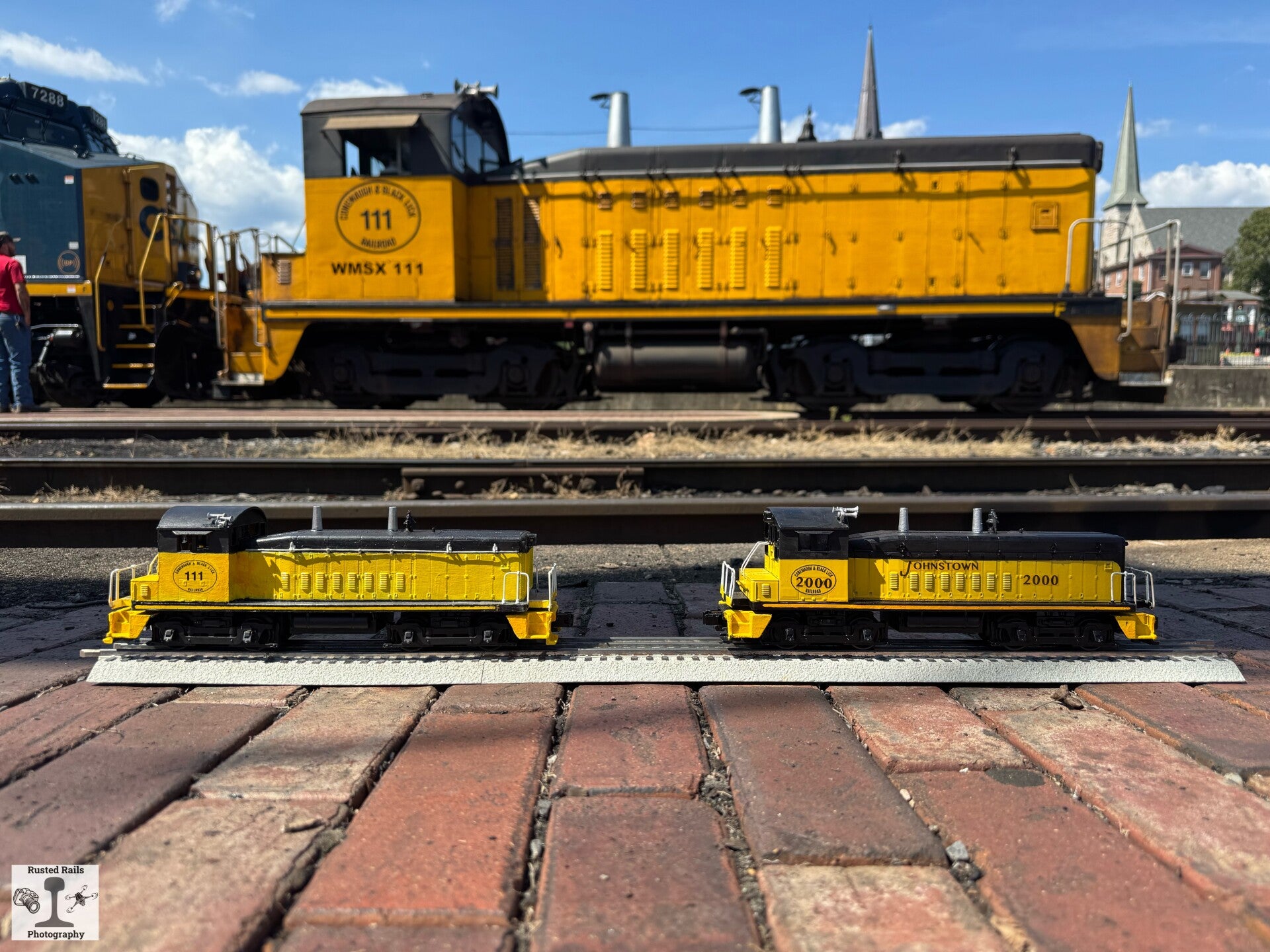
While I don’t always have the resources to work on model railroading projects, I make the most of it when I do. My focus is on painting railcars or locomotives, and I strive for precision, ensuring every detail—no matter how small—is as accurate as possible. Recently, I’ve even started designing and printing my own decals for O scale trains, which has taken my projects to the next level. My latest accomplishments include completing two trains: one received a detailed paint job, while the other was built from the ground up using parts I sourced online. I’ve also been working on minor touch-ups for railcars. Please note, these models are not for sale.
- Completed painting work on Conemaugh and Black Lick 2000, inspired by an NW-2 locomotive that was dismantled on February 12, 2025.
- Finished Conemaugh and Black Lick 111, an SW-7 switcher that Phoenix Rail sold to the Western Maryland Scenic Railroad.
- Painted multiple gondolas intended for use as model scrap cars.

Google Earth Scrolling & Exploring New Places

Google Earth has been an indispensable tool for many of my outdoor activities, including hiking, biking, and mapping trails. Without it, these tasks would often feel overwhelming. It allows me to study the terrain of places I frequent, helping me identify features I might otherwise miss on foot—features like mining sites, abandoned rail beds, and hidden paths. In some cases, I’d even need a drone to spot these details, but Google Earth eliminates that need. One of its standout features is the historical imagery function, which provides views from the past decade in remarkably clear resolution. This functionality adds another layer of depth to my exploration and planning. I also rely on its path tool to create trail maps for the "Trails to Rails" project. Instead of mapping everything on the ground in real time, the app allows me to retrace my routes and plot them with precision. It's a game-changer for anyone passionate about outdoor exploration and mapping.
Mine Map Sourcing & Viewing

Preserving and honoring the railroad and industrial history of the United States is crucial. In Pennsylvania, countless individuals—ranging from adults to children—dedicated their lives to the mining industry, extracting "black diamonds" (coal) that powered the world. Tragically, many of them either endured unimaginable hardships, lost their lives, or had their health ruined in the process, both above and underground. Today, only fragments of their lives and legacies remain. The once-thriving mines are abandoned and collapsing, the towns have largely disappeared, and the grim accidents that claimed nearly 100,000 lives between the 1800s and the 1920s are often forgotten. Many of these fatalities likely went unreported unless they involved large-scale disasters.
Some of the worst bituminous coal mining tragedies occurred in the Pittsburgh-Fairmont region. Notable disasters include the Darr Mine in Van Meter, Pennsylvania, located along the Great Allegheny Passage (GAP) trail, and the Monongah Mines in Monongah, West Virginia, now marked by a rail bed-turned-side street. These sites serve as somber reminders of the sacrifices made by miners of the time and the role they played in our history.
I enjoy collecting old maps of areas I explore, comparing them to what remains today. It’s a meaningful way to connect with history and remind others of how these structures came to be and the immense hardships endured by those who built them. Reflecting on these stories also serves as a stark reminder of how much better conditions are today compared to the struggles of the past.
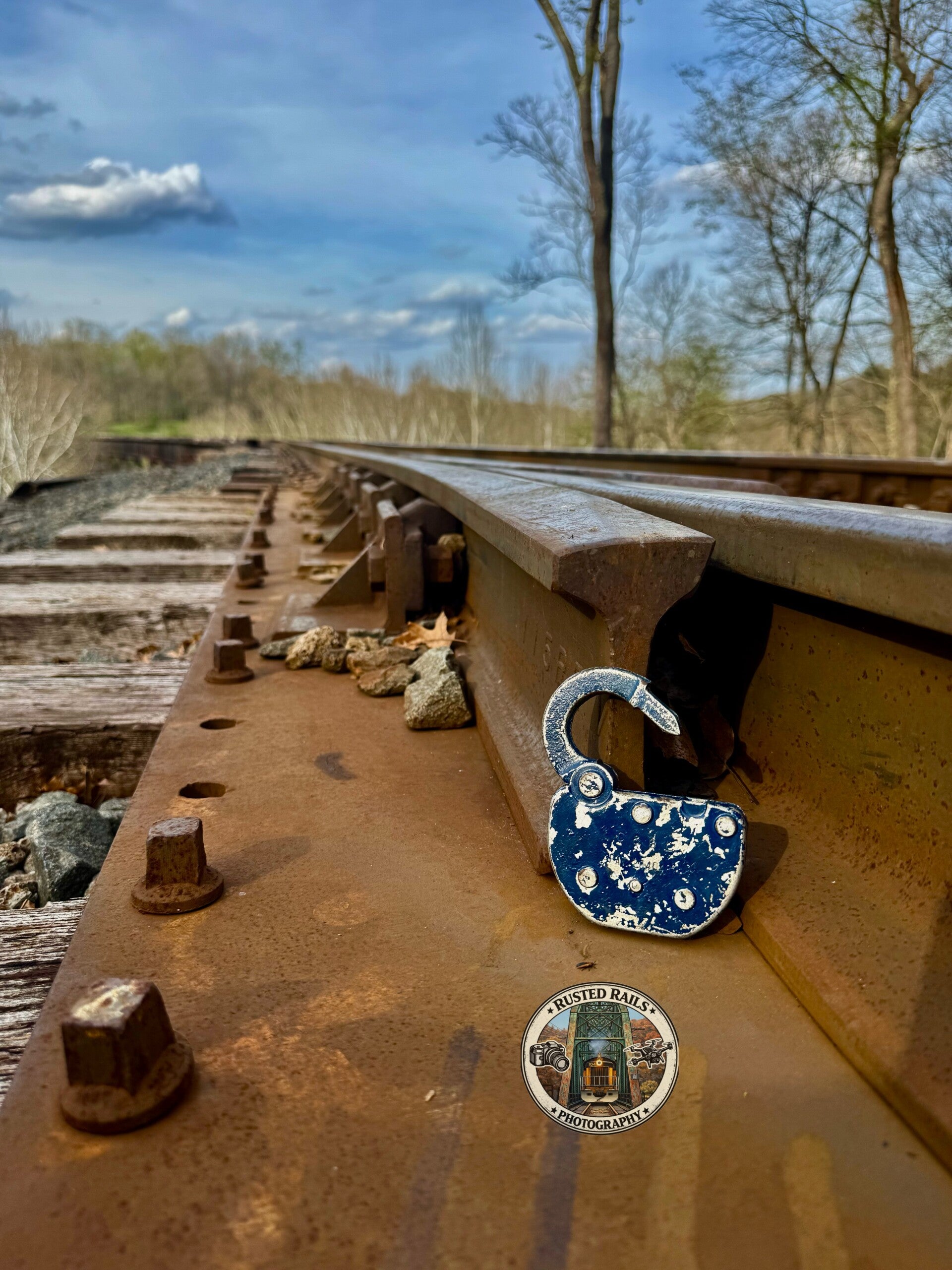
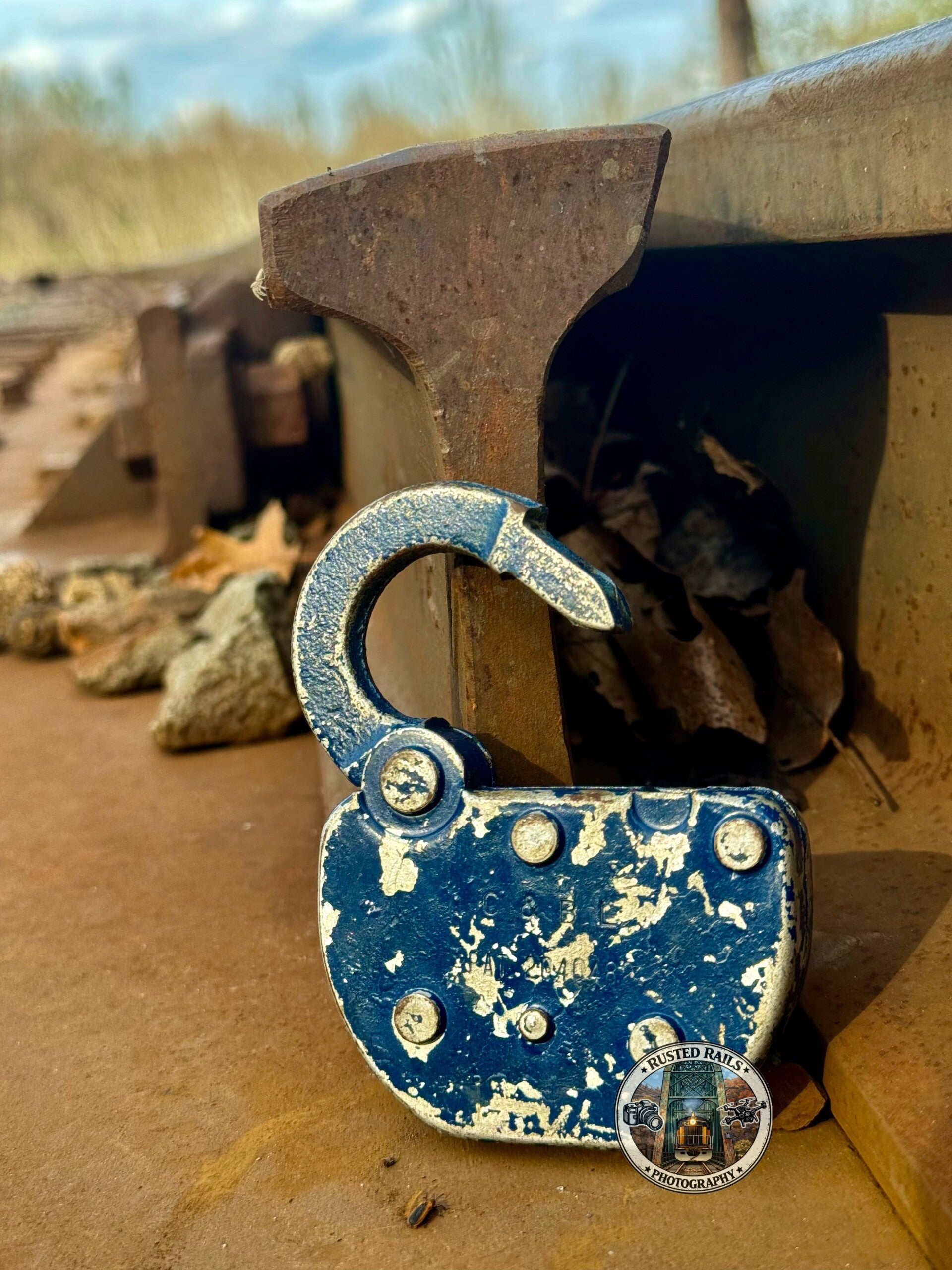
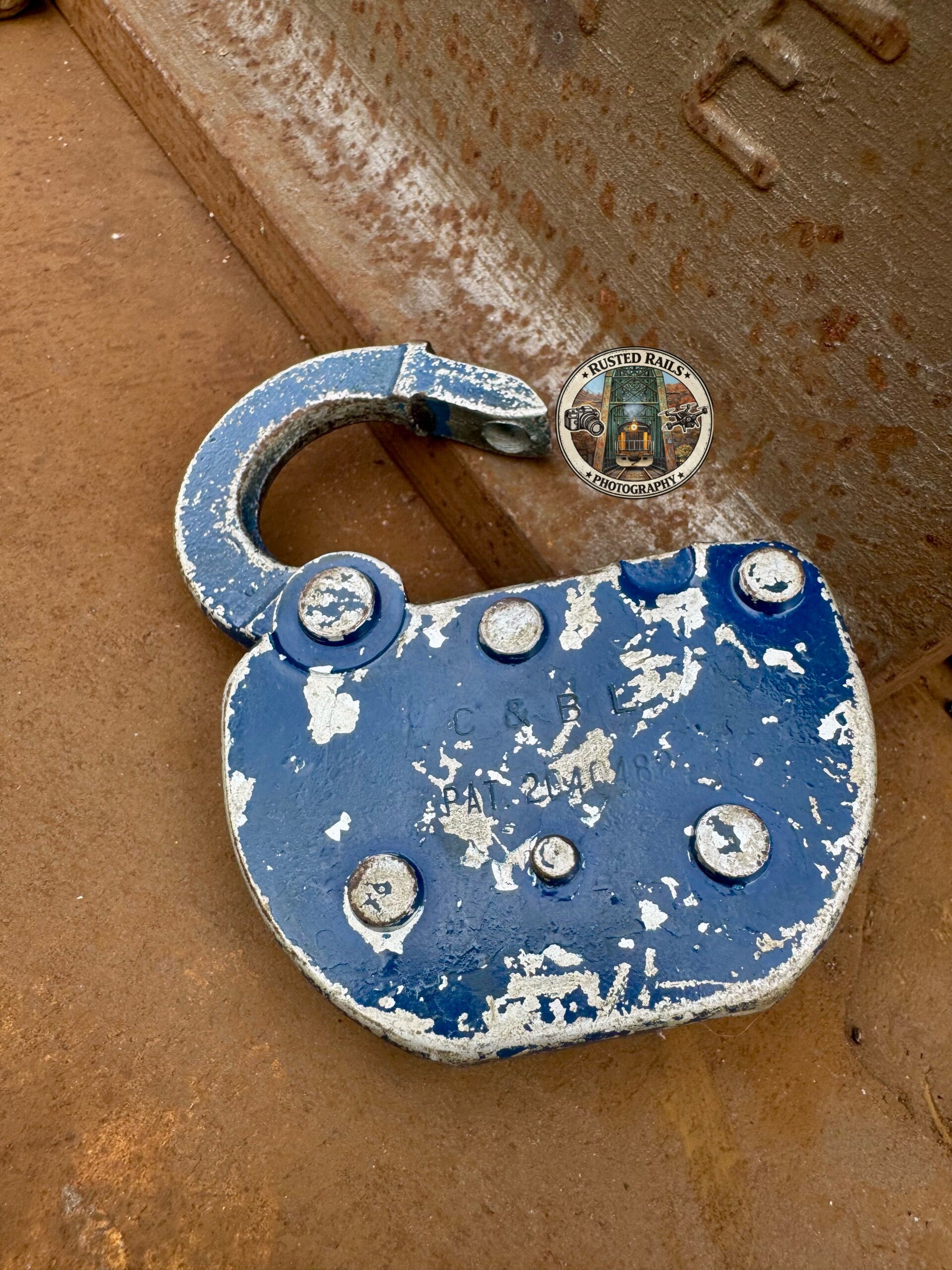
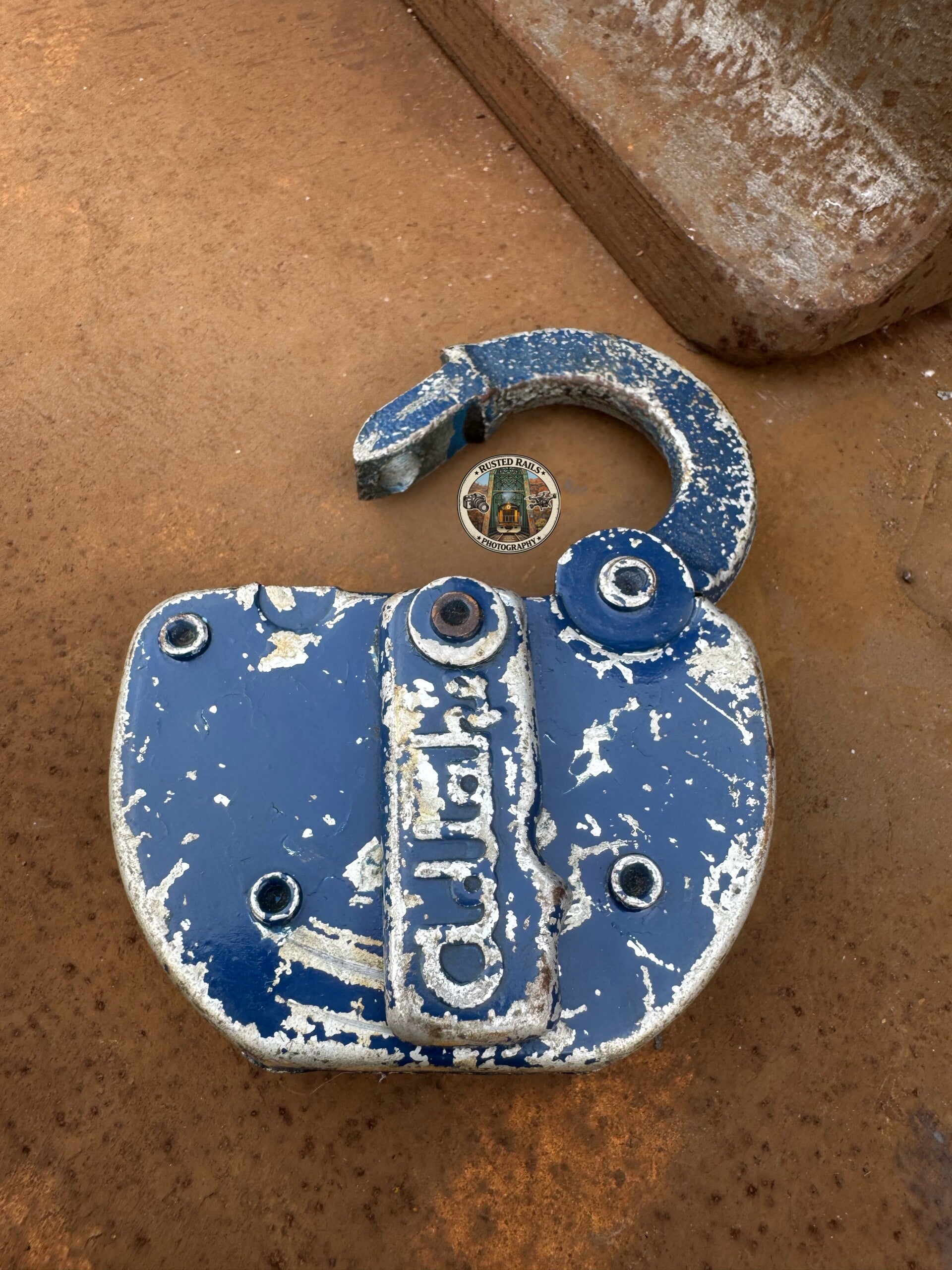
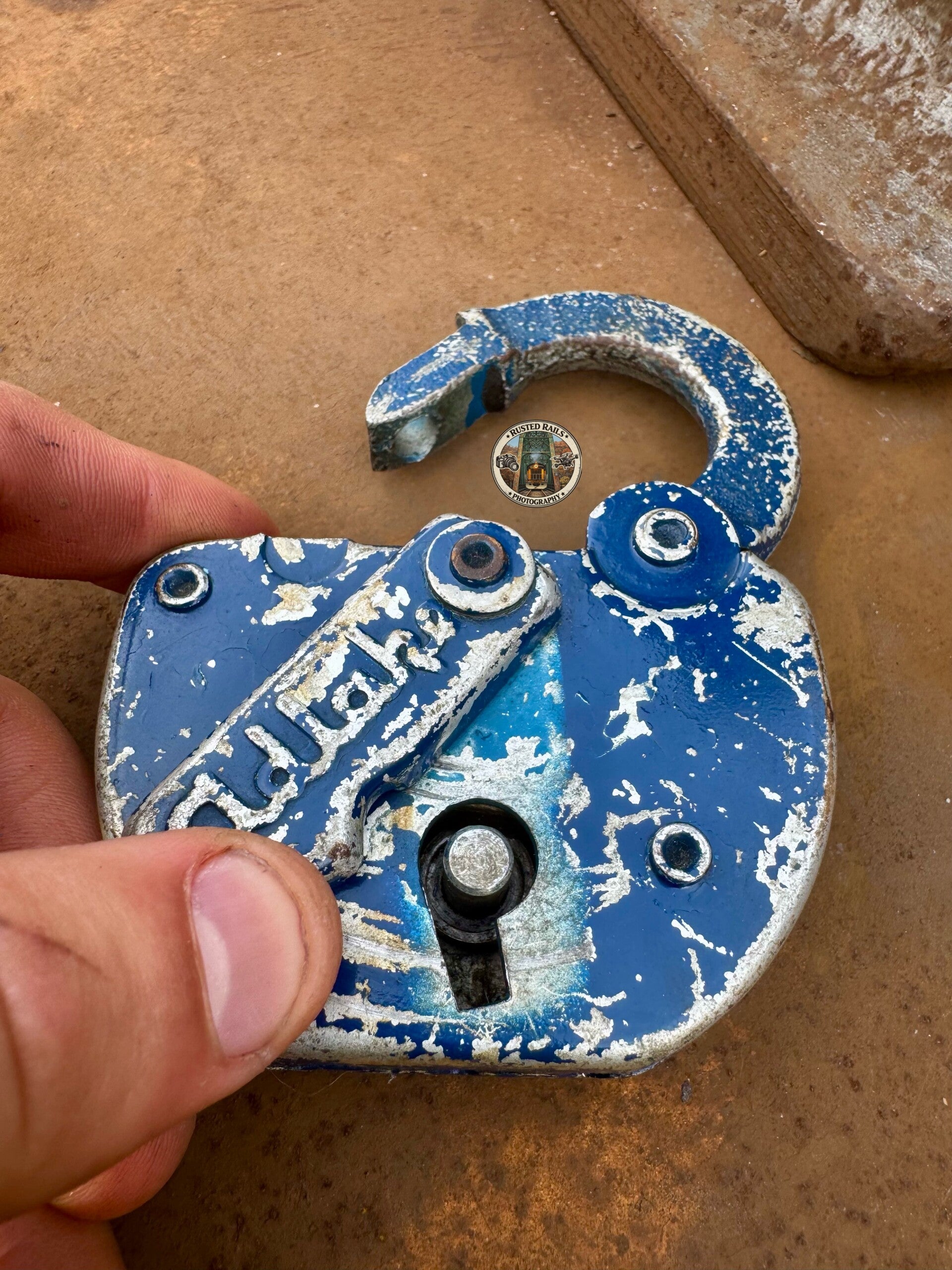
C&BL Adlake Number 48 Lock
Cool Ebay find I snagged. I have always wanted on relevant to my areas that I frequent.
Since the C&BL is no more and Phoenix Rail Inhabits their tracks, I assume this lock was in service for over 50 years in Johnstown Pa and was no longer needed by them. Maybe they put on new locks.
PRR Adlake Railroad Lantern
Bought for $50 at a train convention in 2018 outside of Baltimore when I was just a young boy, this lantern carries with it quite a story and sentimental value that I cherish.
This particular lantern was unfortunately abused by its last owner, who painted it a dull gun metal color, cut it so that a corded light could awkwardly fit inside, and even dropped it, resulting in cracked glass that marred its original beauty. I took on the task of burning off the paint, carefully removing the light and cleaning it off some to restore it to its former glory.
Here it is, proudly overlooking the picturesque Peters Creek Road section of the Montour Trail. This specific section of the trail was at one point home to the historic PRR Peters Creek Branch, a fascinating part of our local rail history.


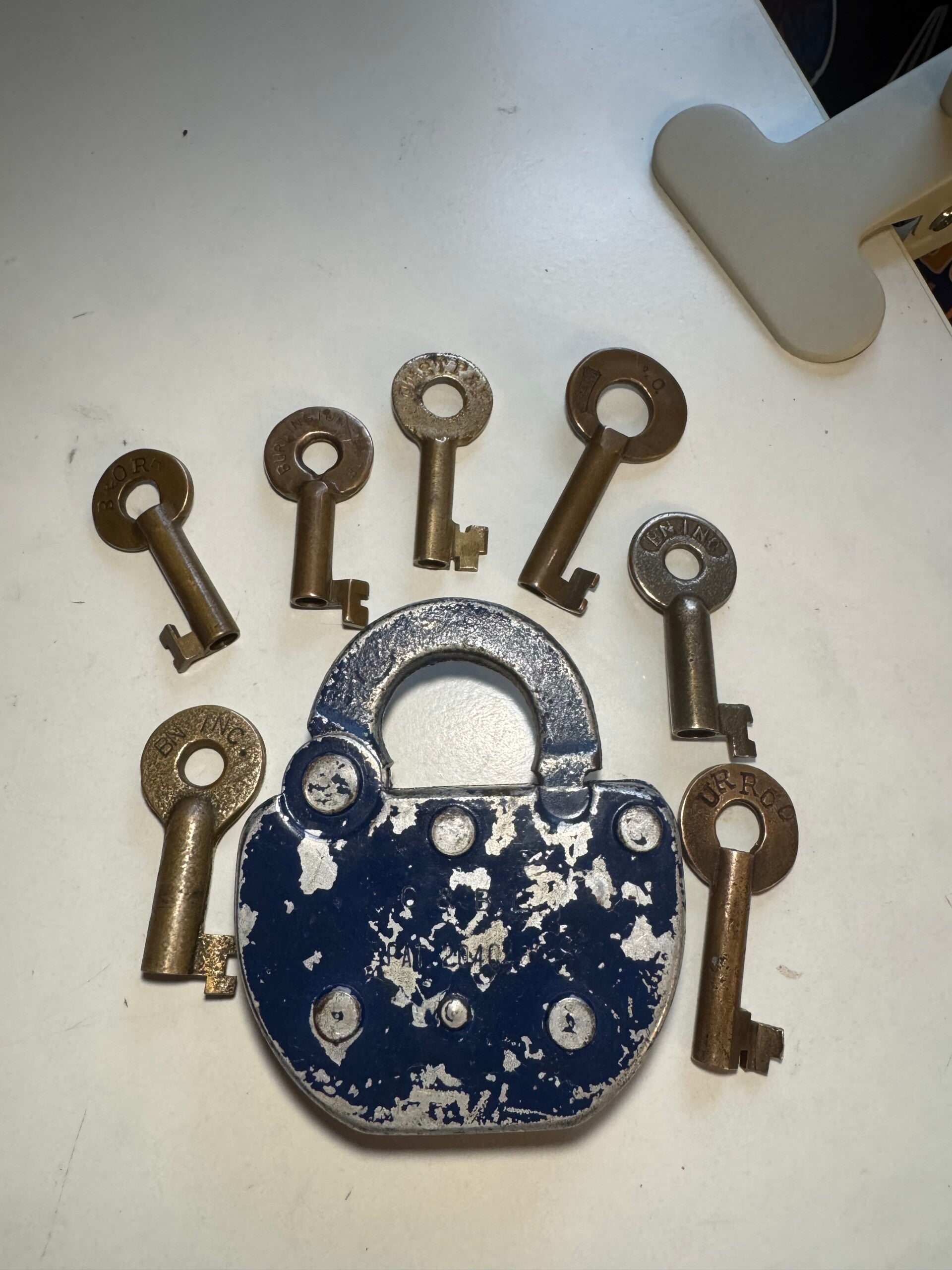
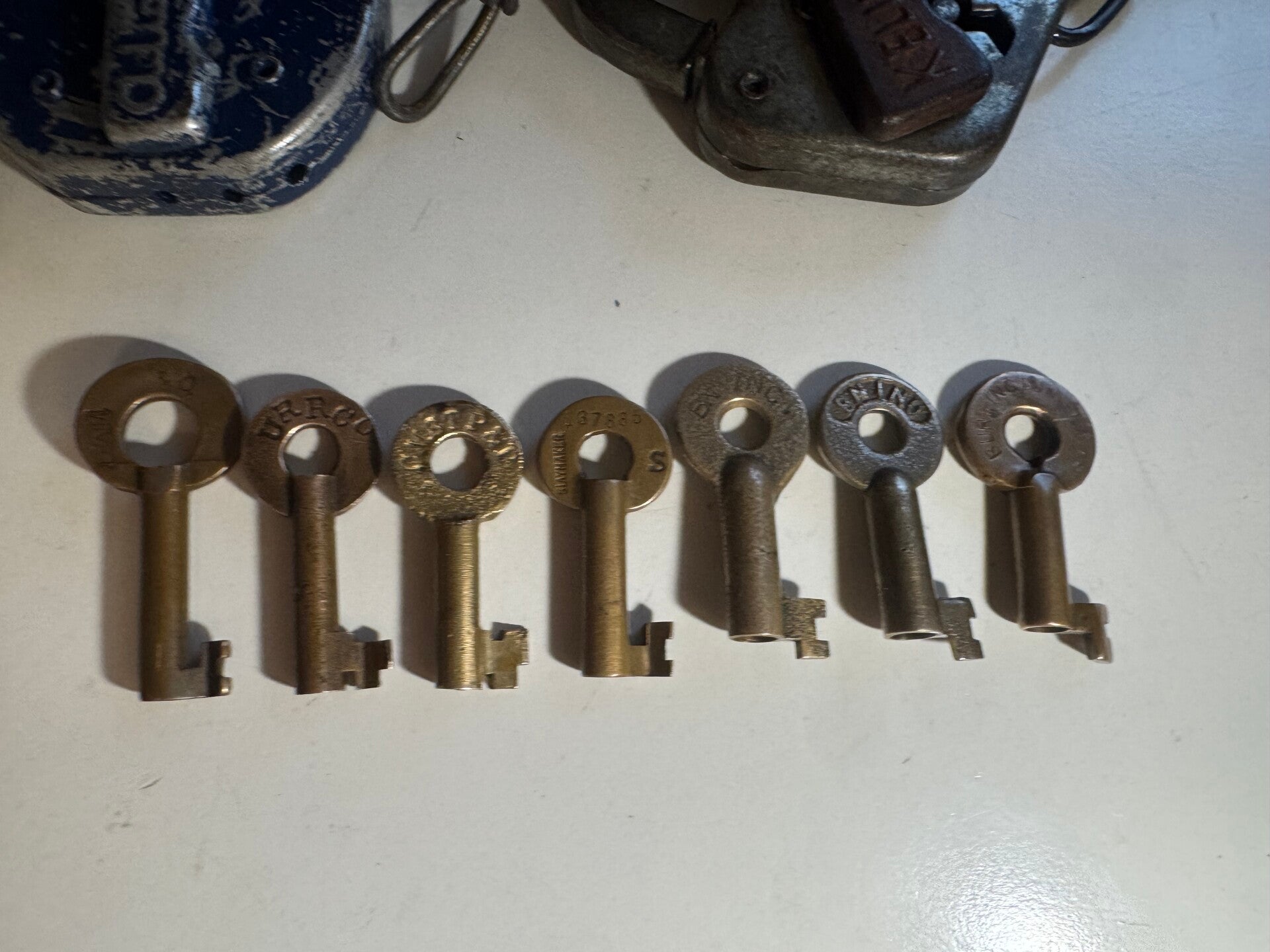
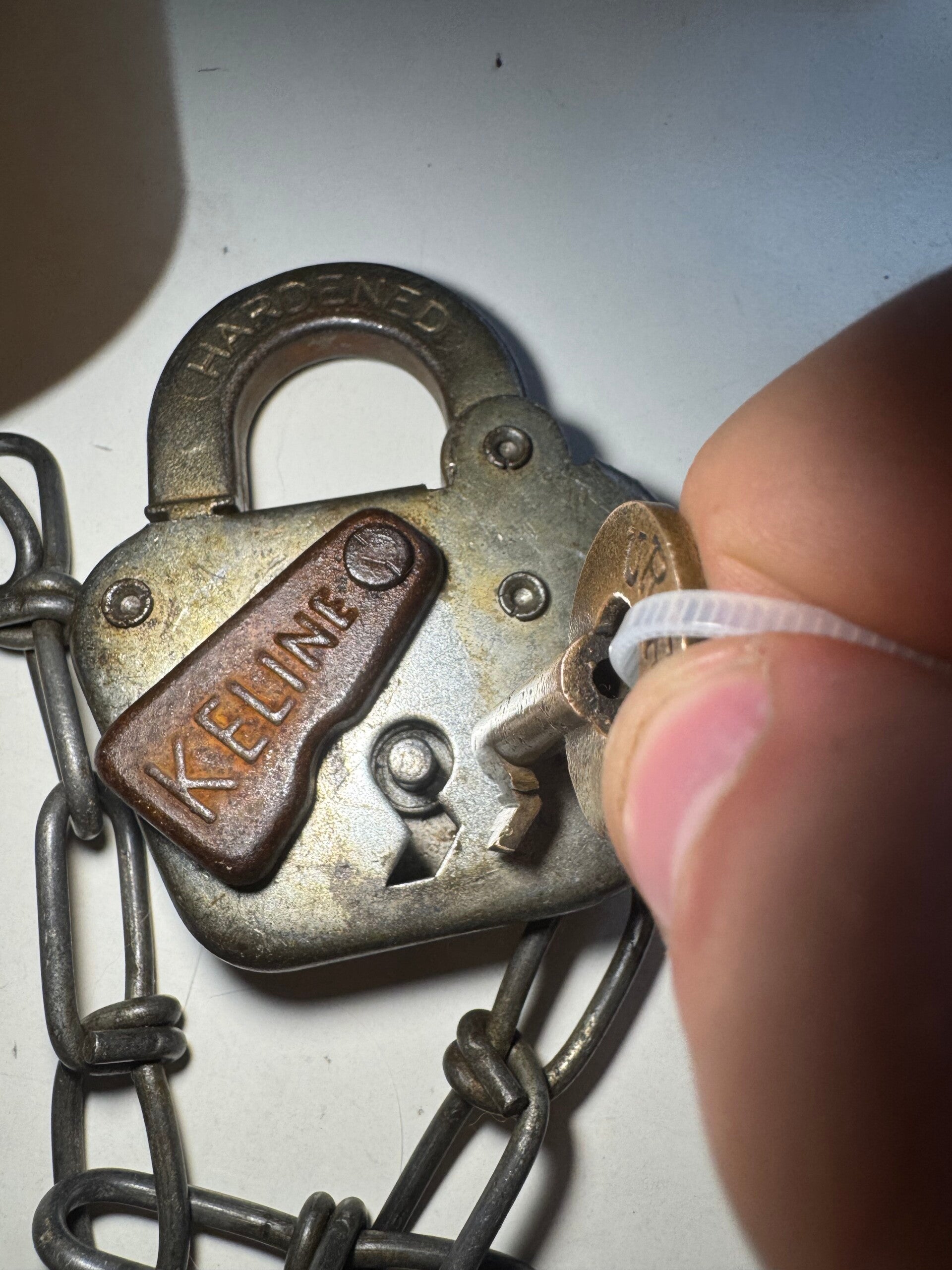
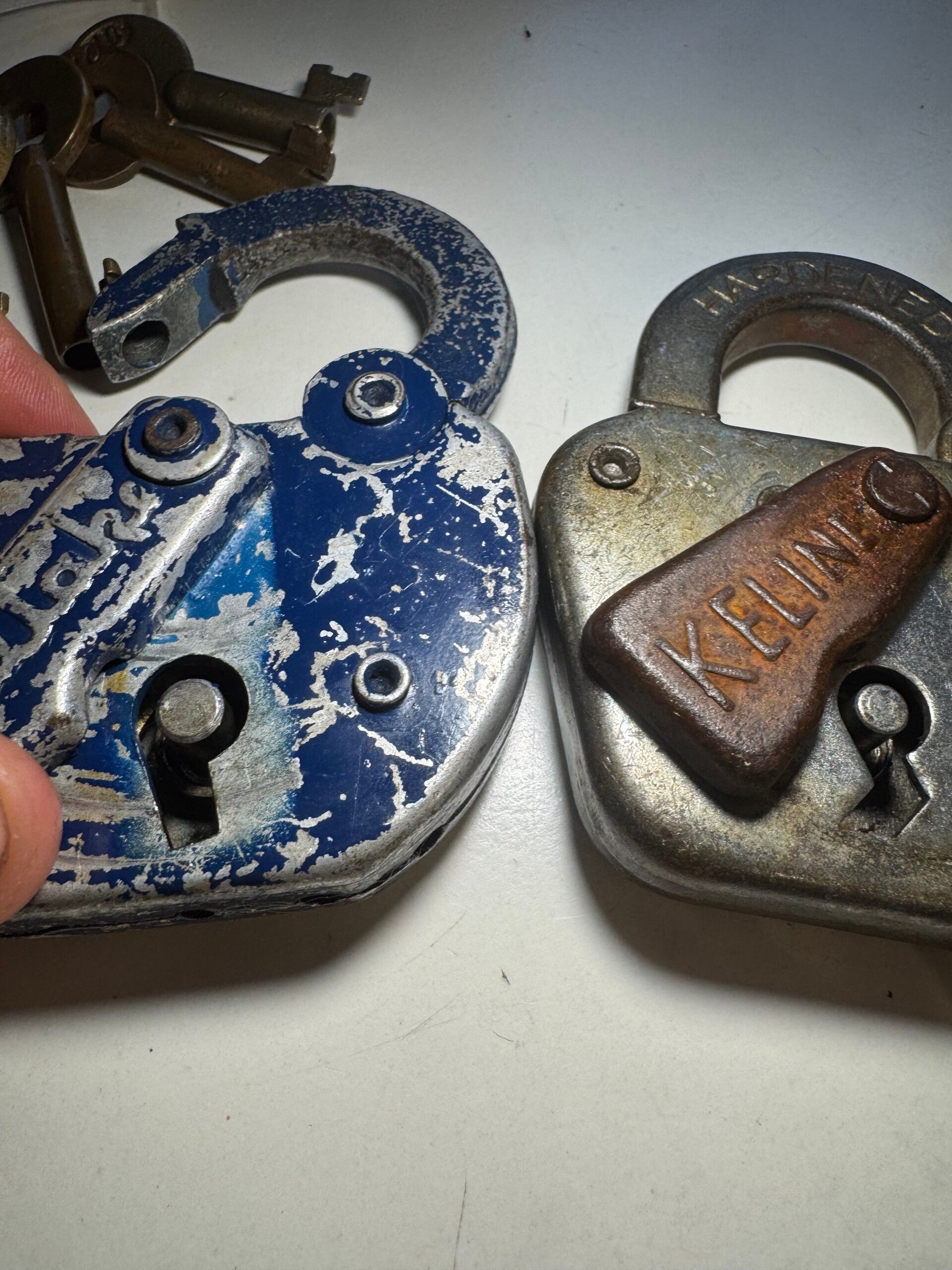
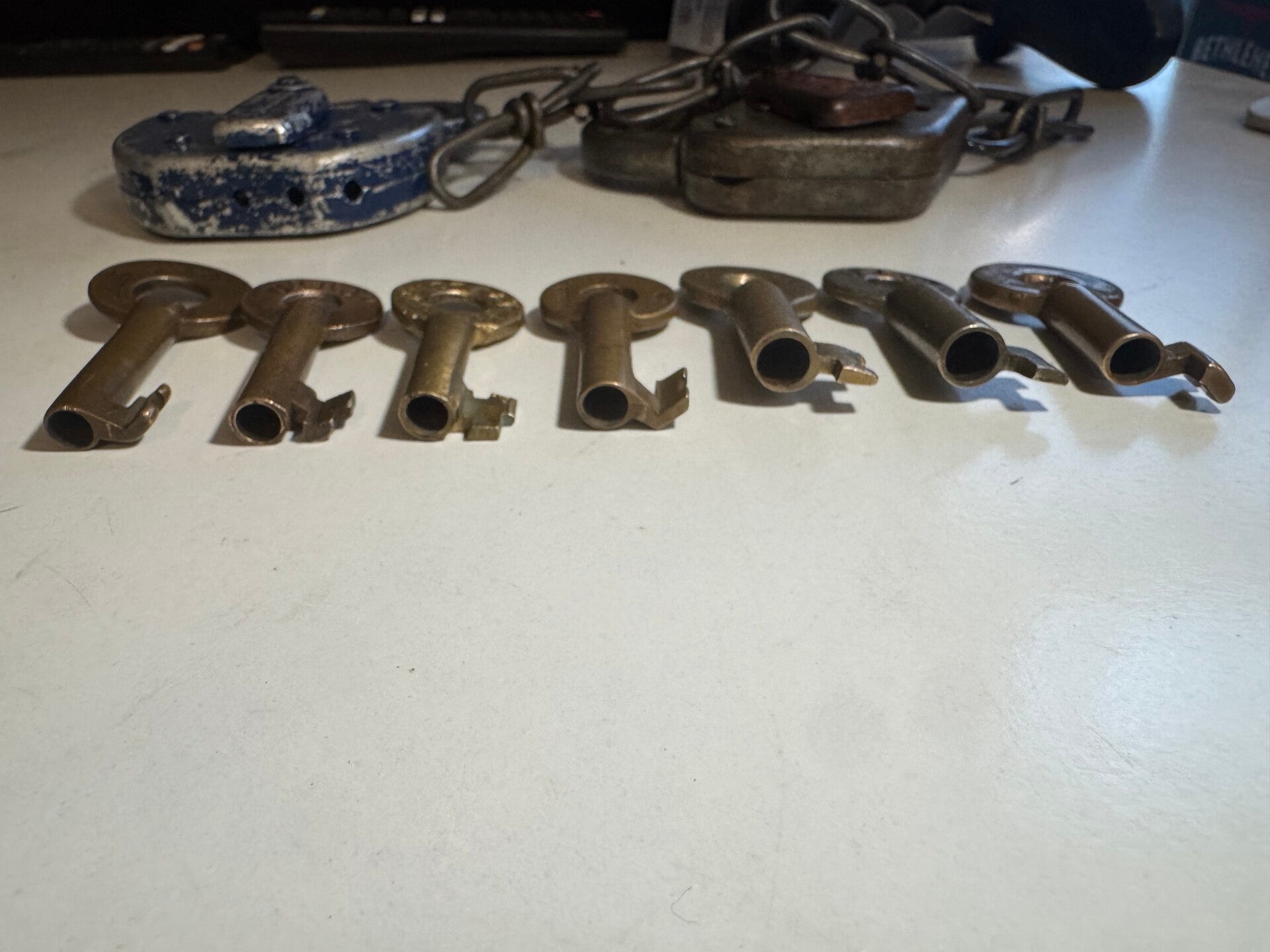
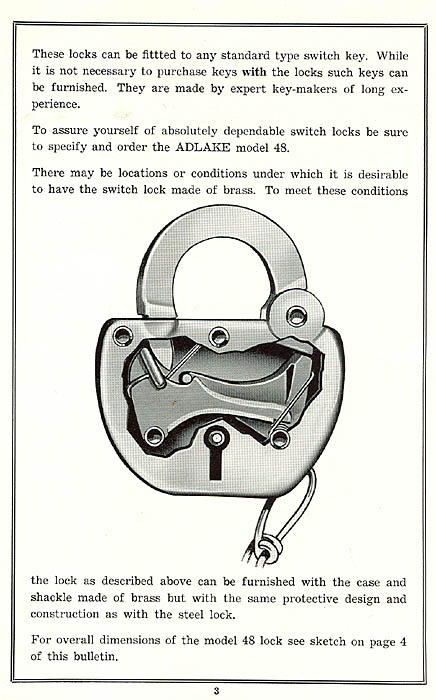
Brass Railroad Keys for Adlake & Keline Padlocks
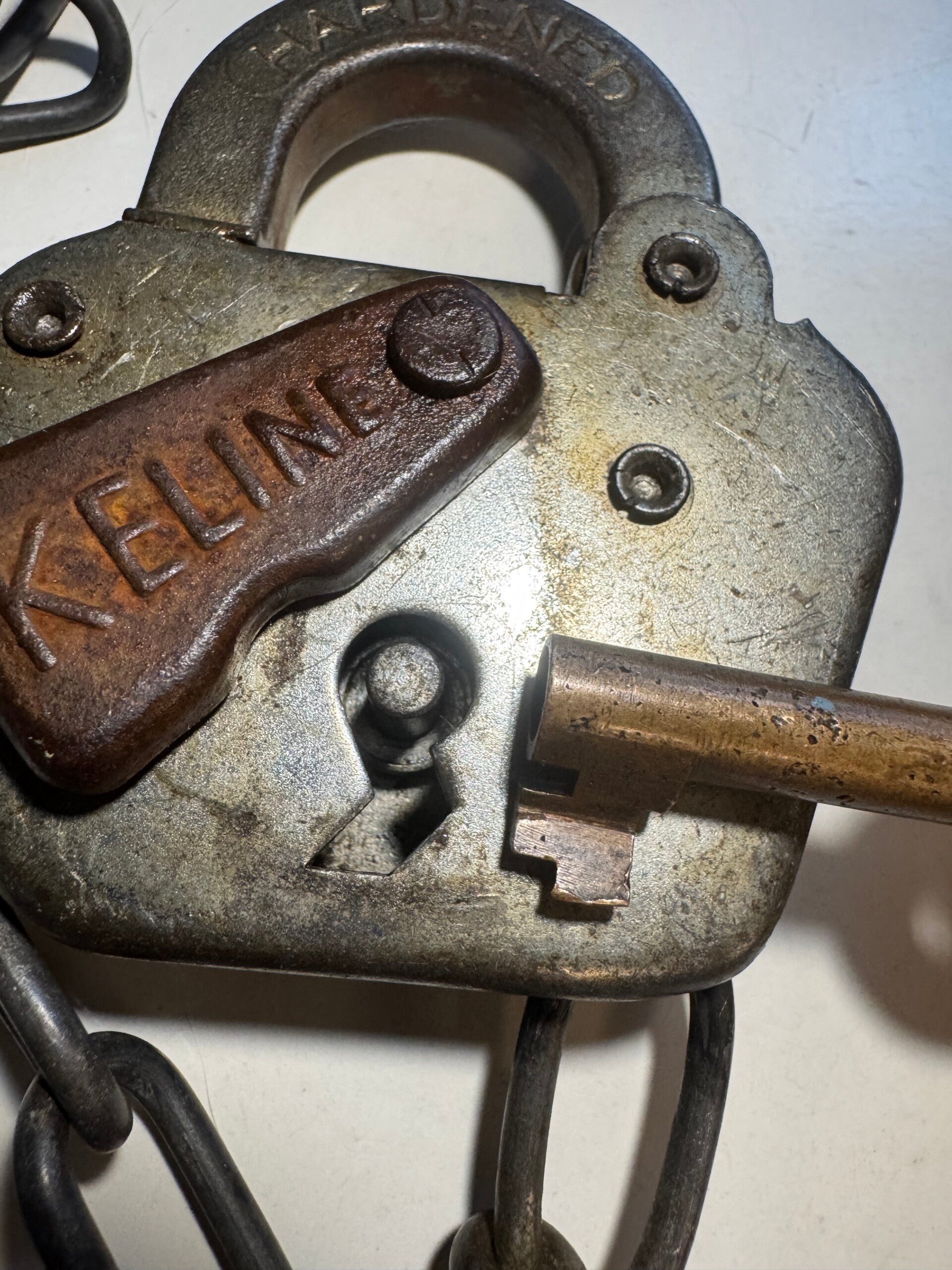
Railroad switch lock keys are designed with distinctive, non-standard shapes to ensure only authorized personnel can operate track switches. Unlike typical house keys, they often have elongated shafts and uniquely cut bit ends or notches that match specific internal lock mechanisms.
Take a look at the shape of the keyhole and the ring situated beneath the barrel key rod. The design and cuts of this key indicate that it is the correct match for the lock's odd shape. I rally have no name for that shape.
Padlocks come in a variety of designs, leading to a wide range of key types. If you look closely at these two padlocks, you'll notice their key holes differ significantly. And no, you’re not imagining things—the rod on the blue padlock is indeed wider than that of the gunmetal one. I like to refer to the key shape of the left lock as a "backwards 9."
Among the other common types, I've encountered padlocks that use a standard 9-shaped key, while some have a straight line extending from the center circle into which the barrel key fits. However, I do not have the locks but I may however have a key for them. Note all the differences and similarities of these keys.
The image on the right, sourced from Railroadiana.org, presents a clear view of the internal mechanisms of a lock, along with a model 48 design that I currently do not possess. Notably, this lock features a centered line extending from the barrel rod to the opening.
The image on the left showcases a lock featured in a post by the New York Central Railroad Fan Group on Facebook. This lock has a distinctive 9-shaped opening, representing yet another variant of the No. 48 lock type.
The final image from an old eBay listing features another Model 48, showcasing one of the most unusual key shapes I’ve encountered online. The variety of models and lock iterations available for collectors is truly extensive, and there’s so much more to explore.


Railroad Track Slices
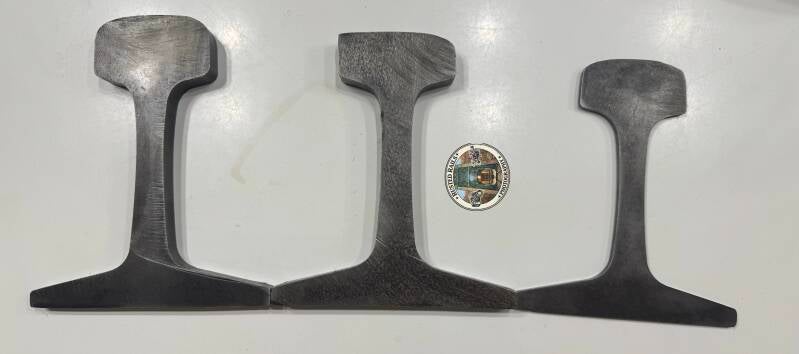
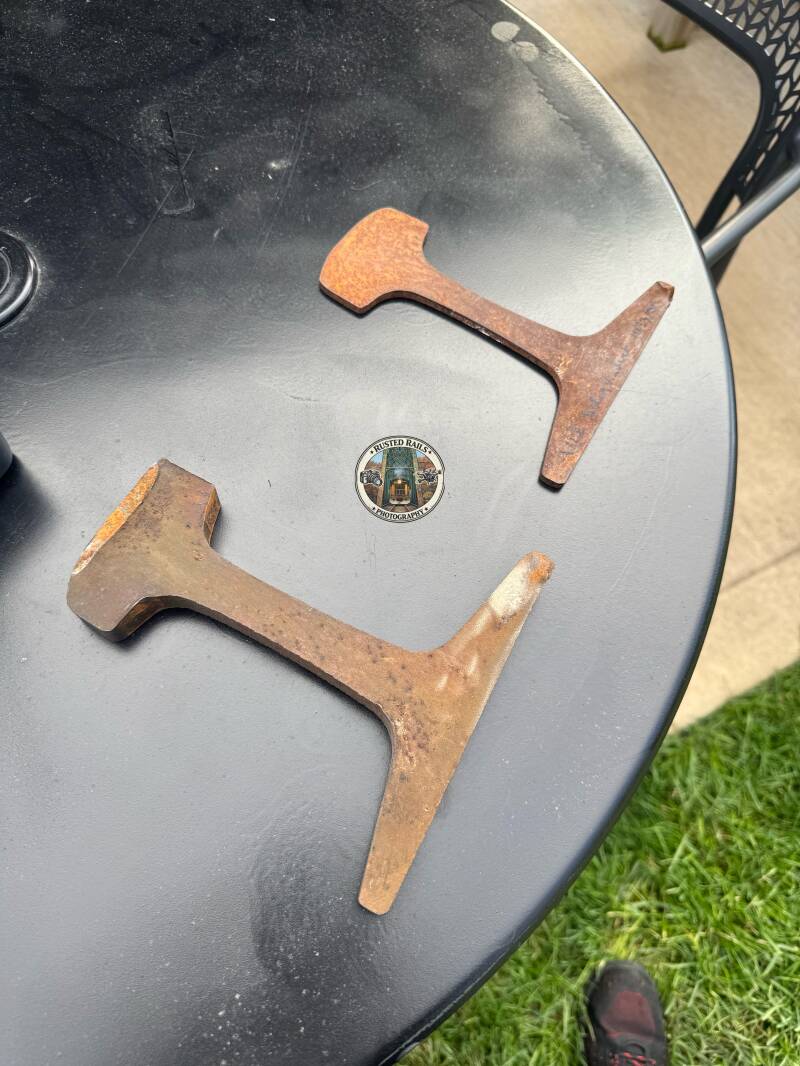
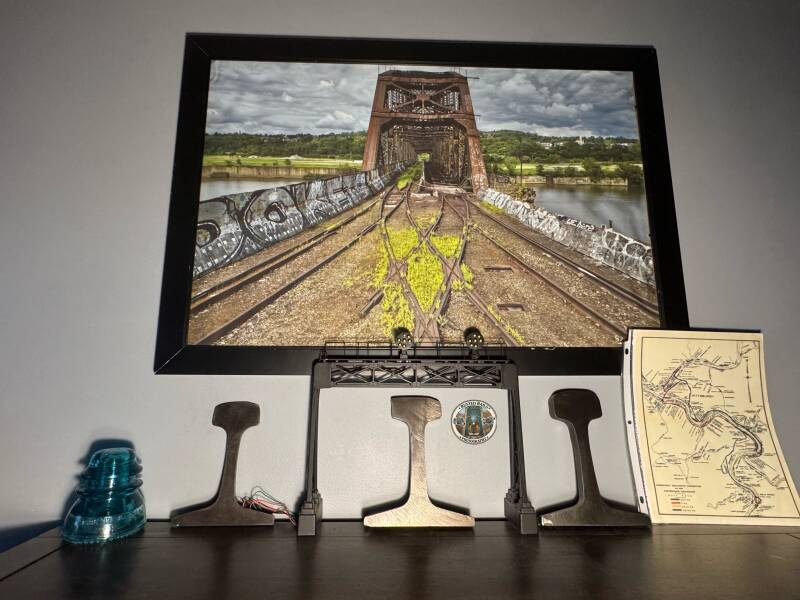
A strange hobby of mine is I collect Slices of railroad track that I find during my adventures.
In the picture with all three tracks on the white table The locations I found them go as follows. Left = Shire Oaks outside of New Eagle, Center = Horseshoe Curve west side, and Right = Sudan Viaduct.
How many trains has gone across these? What led to such a tiny piece of track being cut? I've never know the exact answer to these, but at least I will be able to preserve it instead of Them resting in the weeds beside the tracks.
The next step after finding them and taking them home for cleaning is the millingwork. The pieces that I have found usually have abrasive or sharp areas on the corners. In order to keep them inside I have to grind down the sharp areas, sand down the rough spots, Use a brass wire wheel to brush away the rust, and finally polish them.
A lot of work goes into it and it's messy. Luckily, in my experience pieces of track like these are rare if you don't have access to maintenance of way vehicles or scrapyards where I would expect to see these.
Coal Mines & Maps
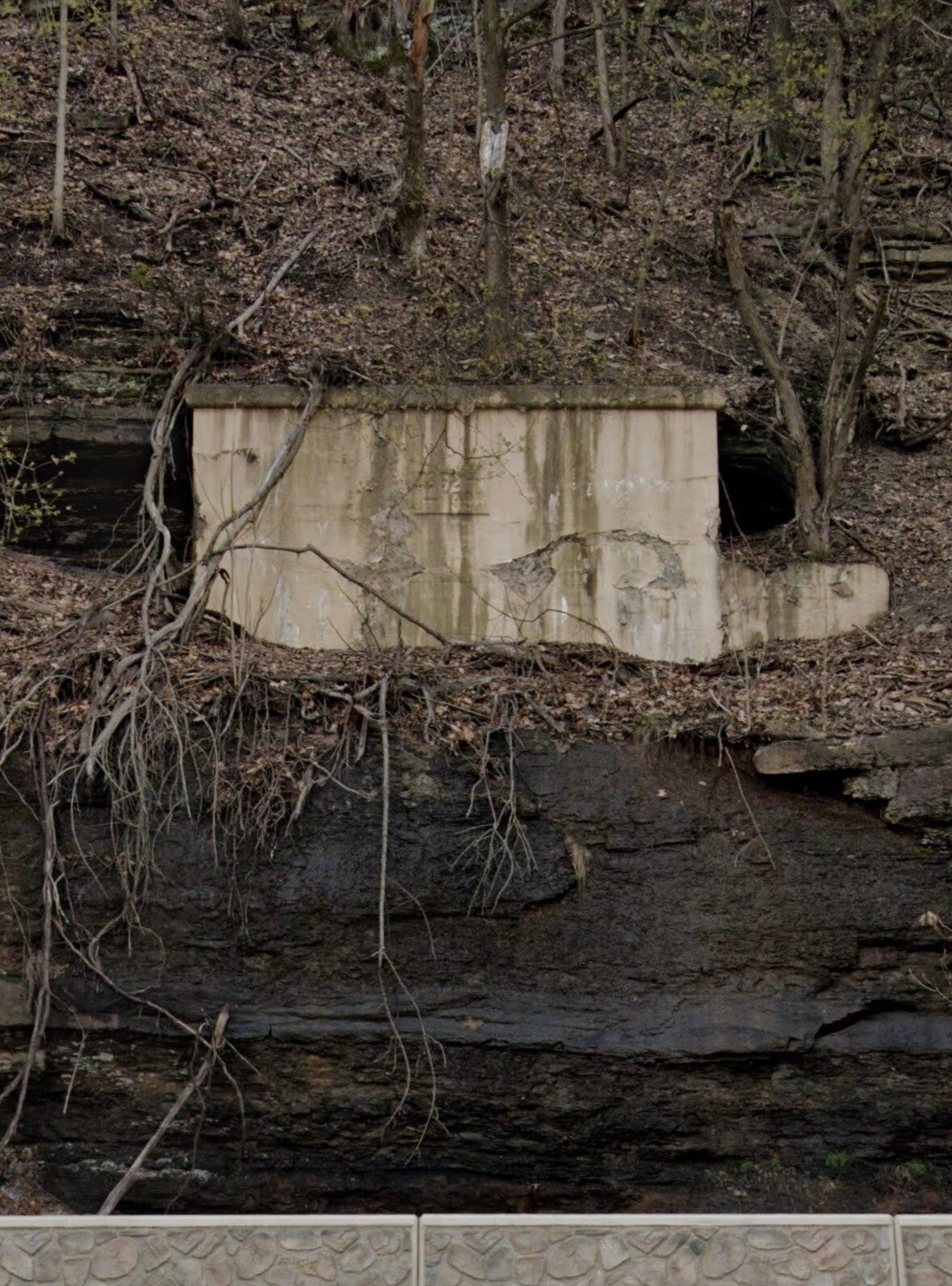
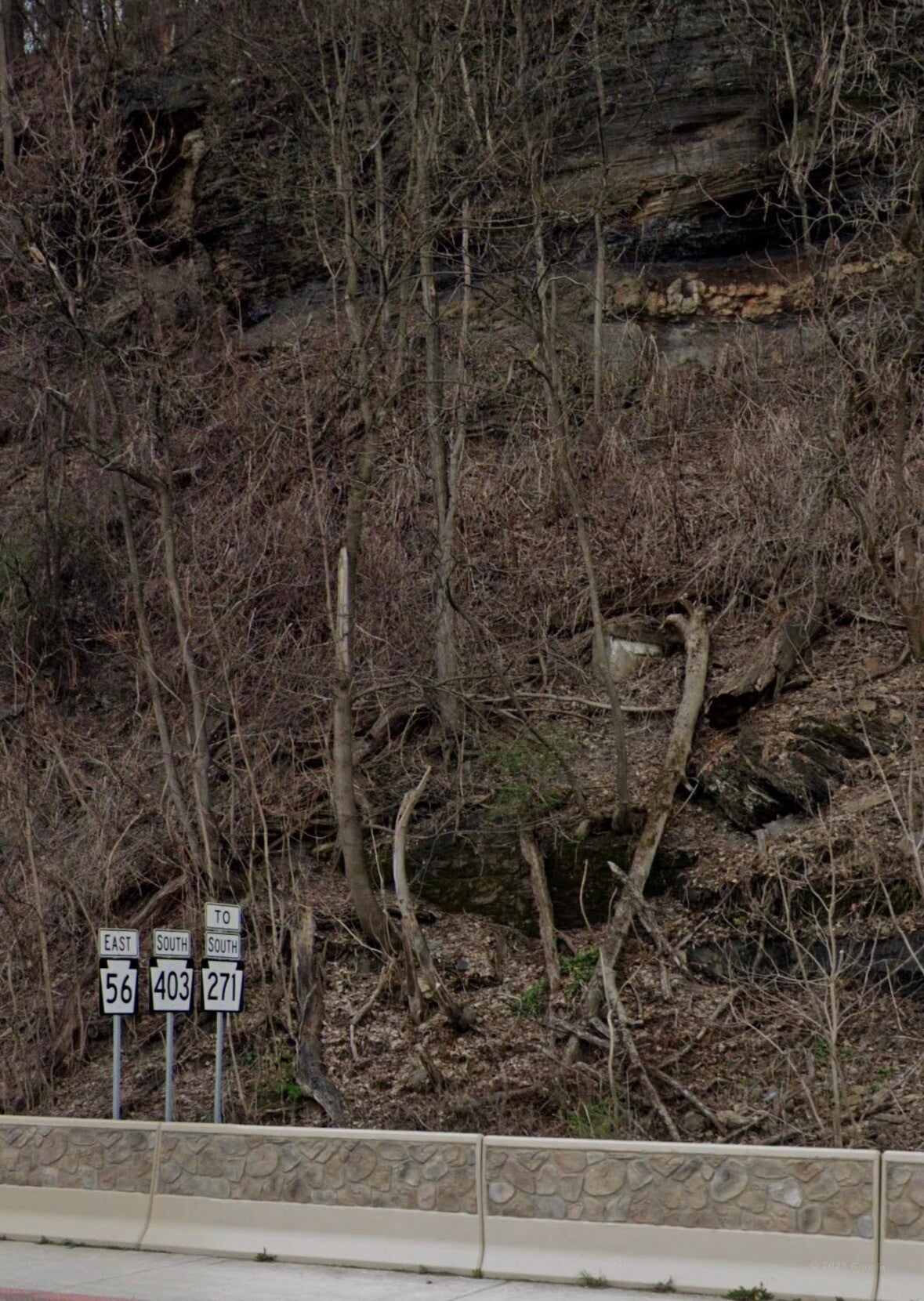
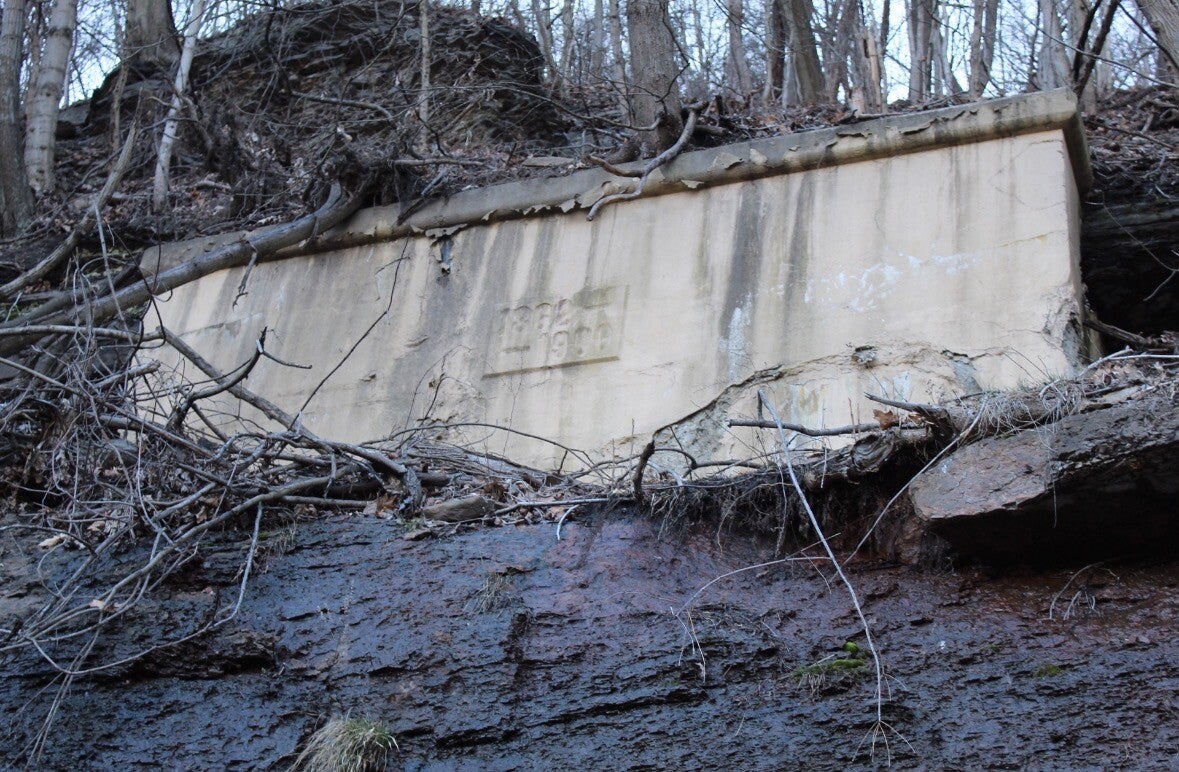
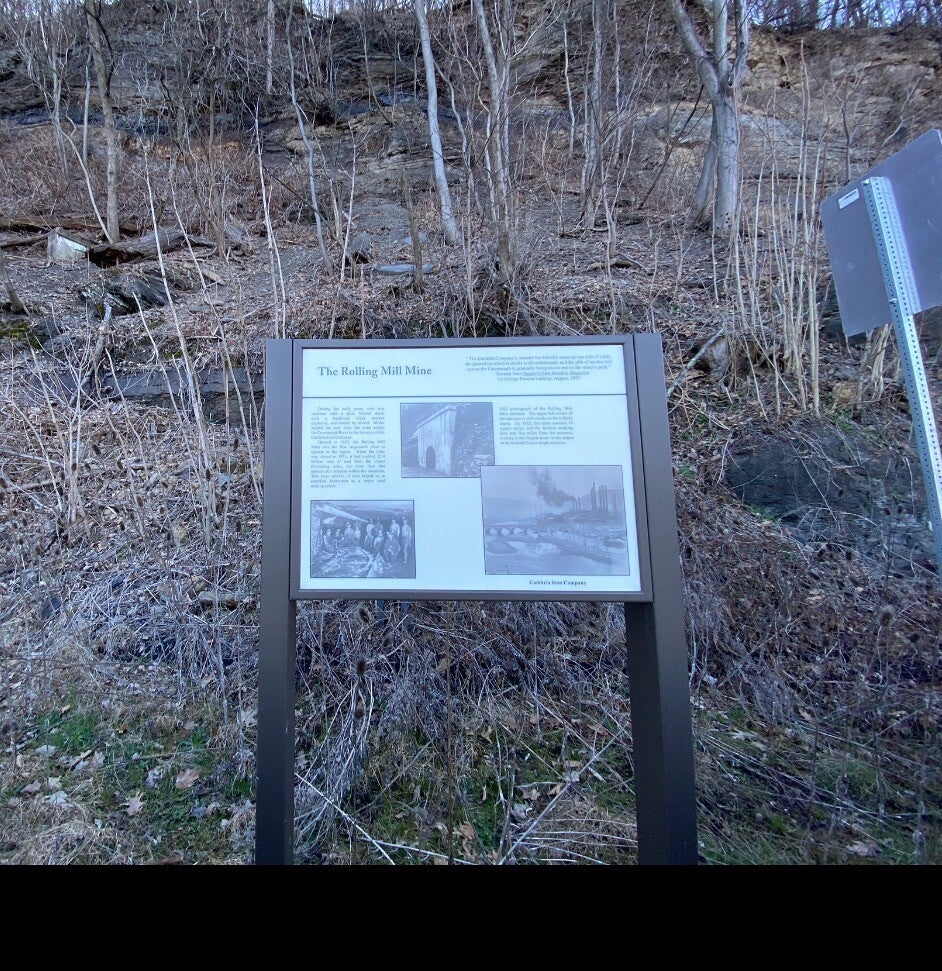
Rolling Mill Mine Johnstwn Pa
The Rolling Mill Mine in Johnstown was one of the most important coal mines in the region’s industrial history, closely tied to the rise of the local iron and steel industry. In operated by Cambria Iron Co and Bethlehem Steel Co from 1856 to 1931 mining coal from the Upper Kittanning coal seam.
In 1902 there was an explosion deep in the mind that resulted in the deaths of 112 miners. I had to look at this next part. 7 died directly from the explosion caused by a miners head lamp. On top of that 105 miners died from afterdamp as they lead towards the Mill Creek portal of the mine. Apparently, that was the only other portal other than the portals above what now is PA - Rt 56. (PA Conservation Heritage Project). The mine continued operation until the 1930s after the disaster. The Bethlehem Steel Company operate until the coal reserves were depleted.
Mine disasters like this were common, Lots of mines only had one, two or three entrances usually, which resulted in lots of unnecessary tragedy.
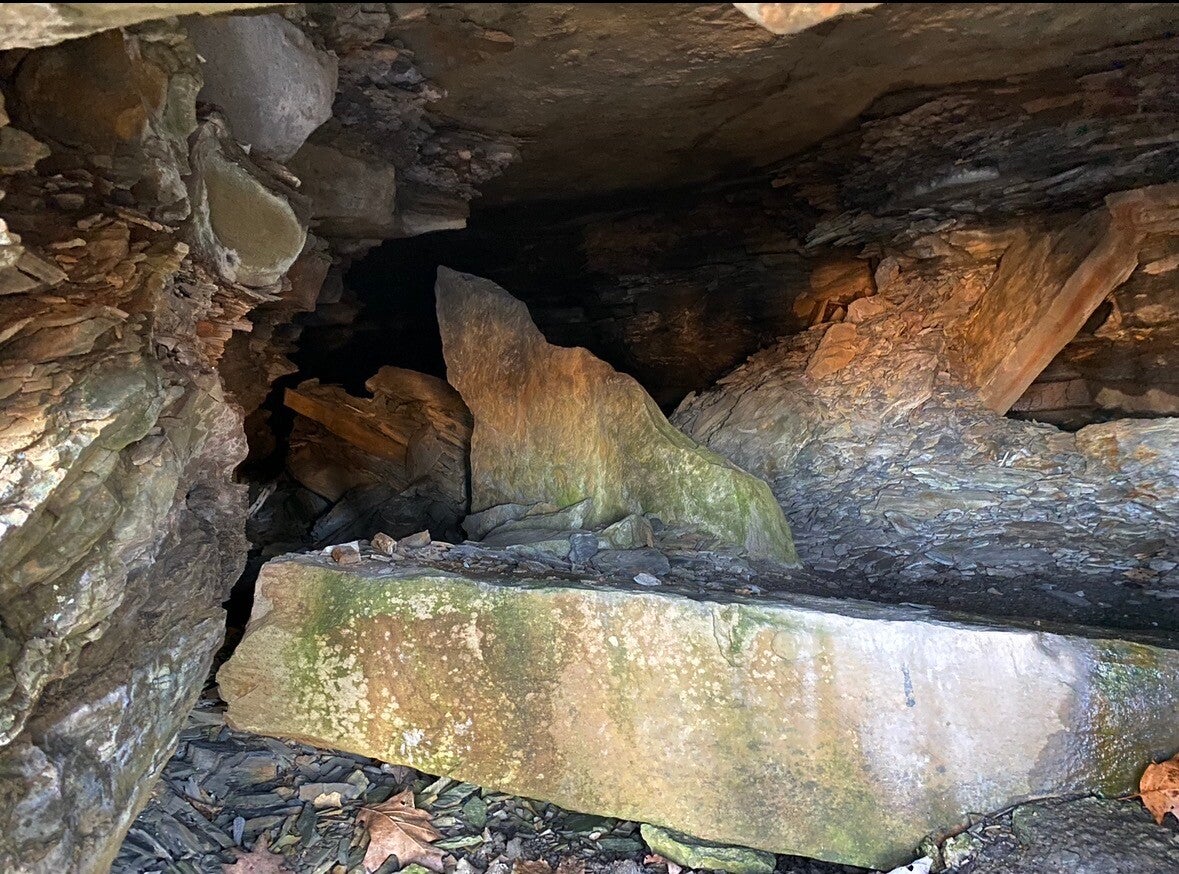
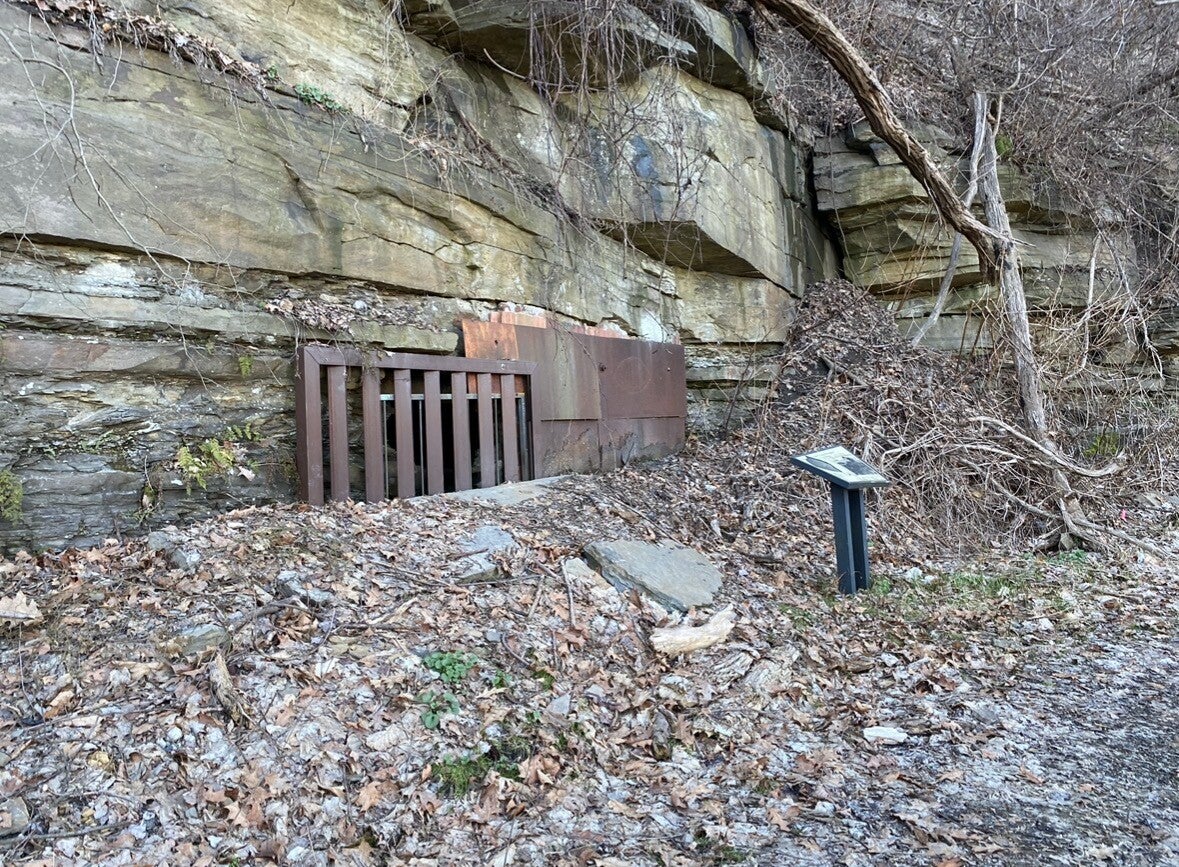
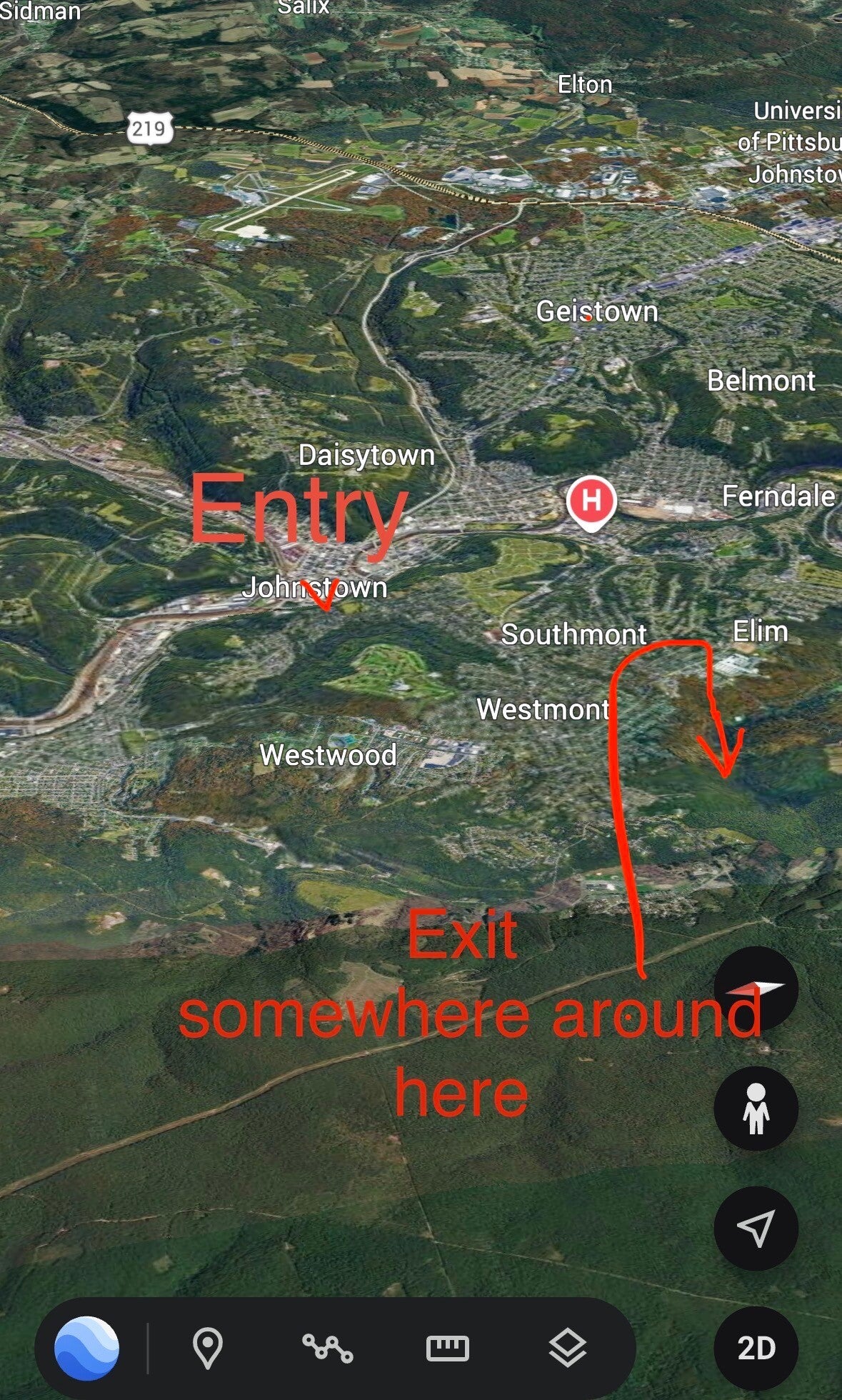
"G" Mine Pittsburgh Terminal Coal Co No 7
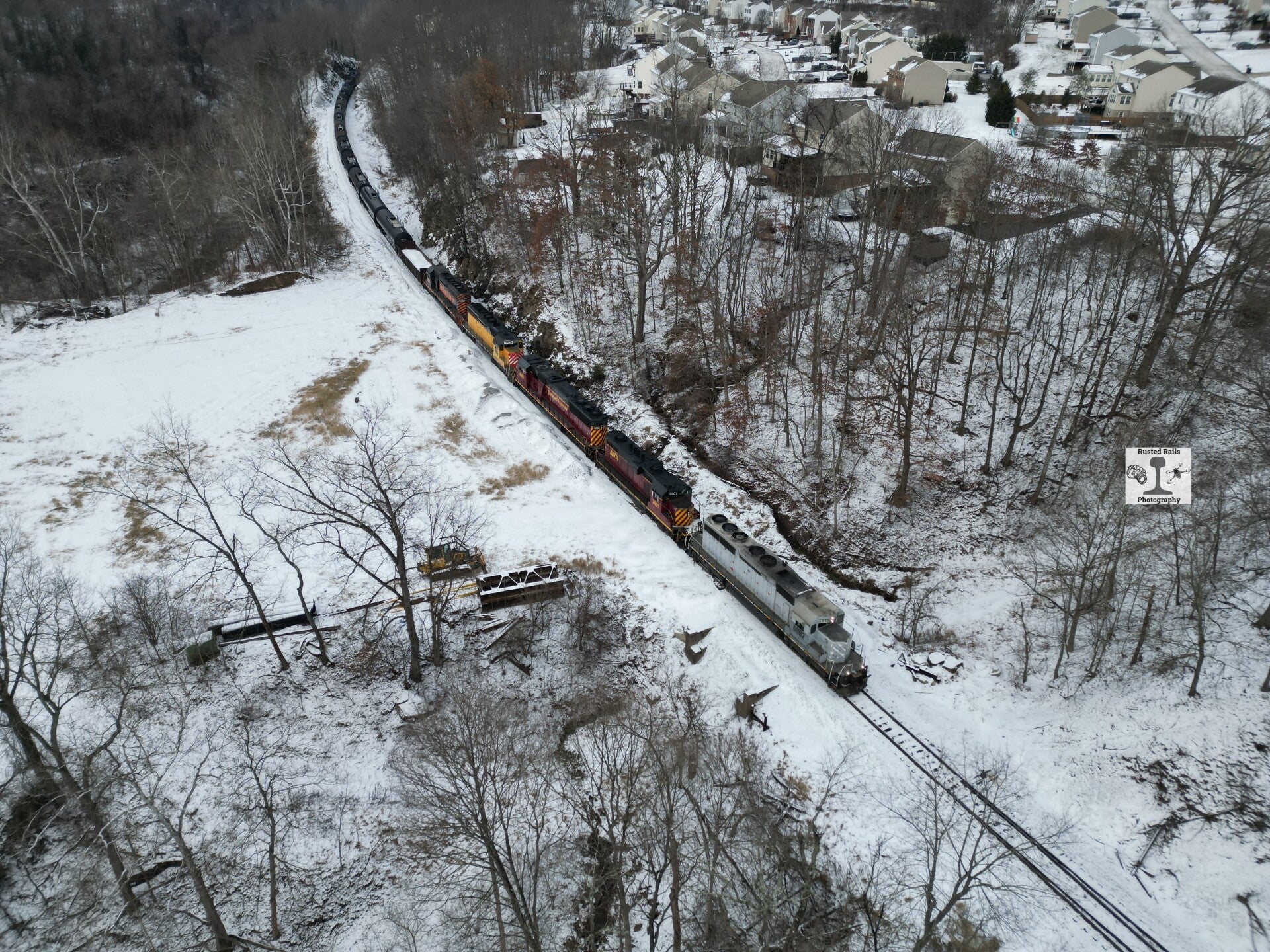
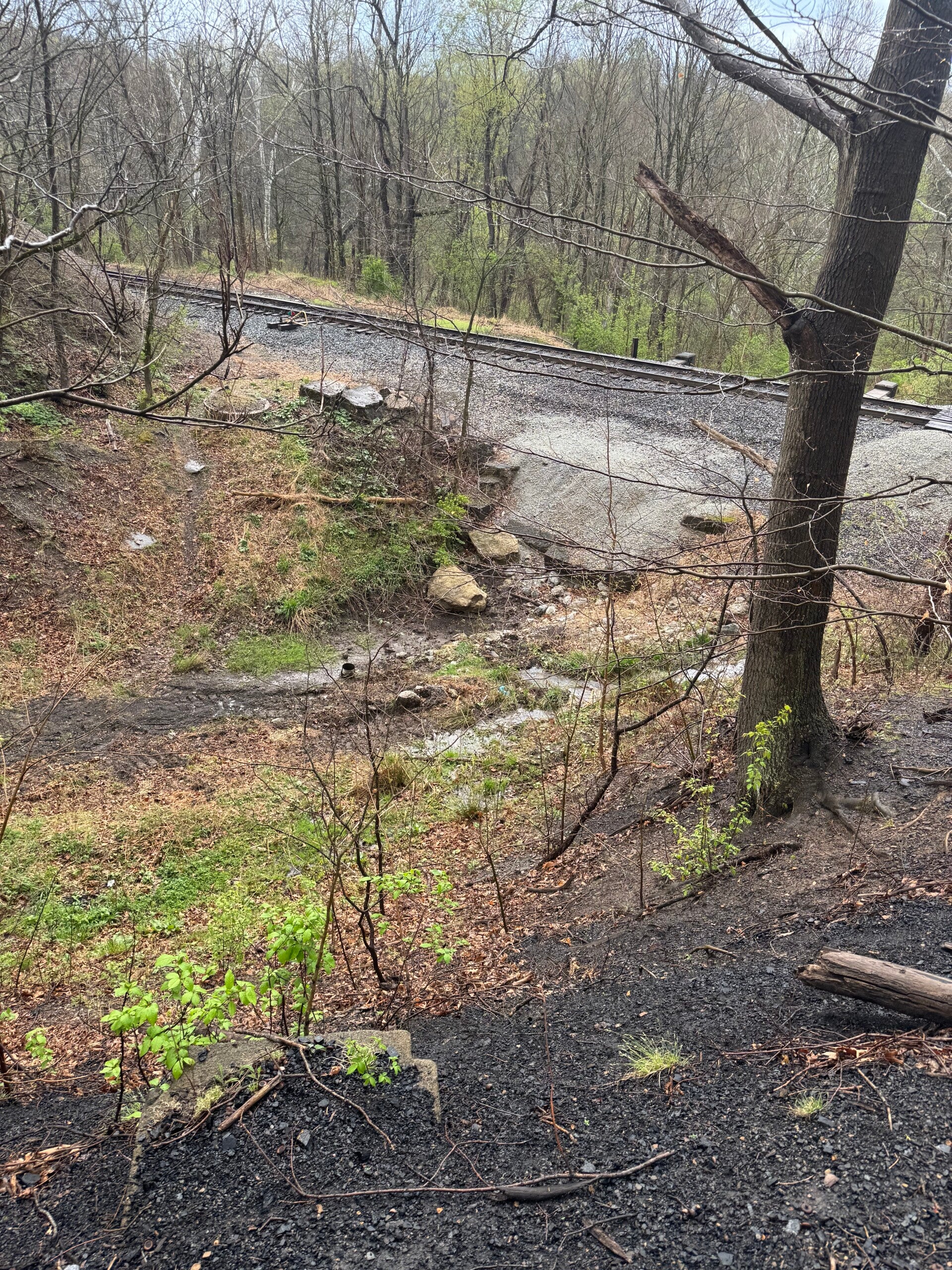
During the winter of 2026, I seized the opportunity presented by the pleasant weather to capture some images of an old mine and the adjacent tracks in Large, PA. This location was historically known as Sebastian Mine and was also referred to as the "G" Mine and Pittsburgh Terminal Coal Co No. 7.
In the initial photos, you'll notice remnants of the portal and the structures that once facilitated operations leading to the tipple. The portal seems to have sagged slightly, and there appears to have been a cave-in just past the entrance, evident in the dark spots scattered across the forest floor.
The mine likely featured an extensive tipple capable of servicing both railroads in the area. The Pennsylvania Railroad almost certainly loaded freight cars there, and it’s possible that the West Side Belt Railroad also received cars for loading.
A small stretch of tracks from the Pennsylvania Railroad’s Peters Creek branch is still visible in a marsh next to Peters Creek Road, which leads to the bus depot. The Wheeling and Lake Erie Railway operates on the former West Side Belt line, extending from Rook Yard in Green Tree all the way down the Clairton Branch to the Monongahela River, where they interchange with URR and NS.


Mongah Mine
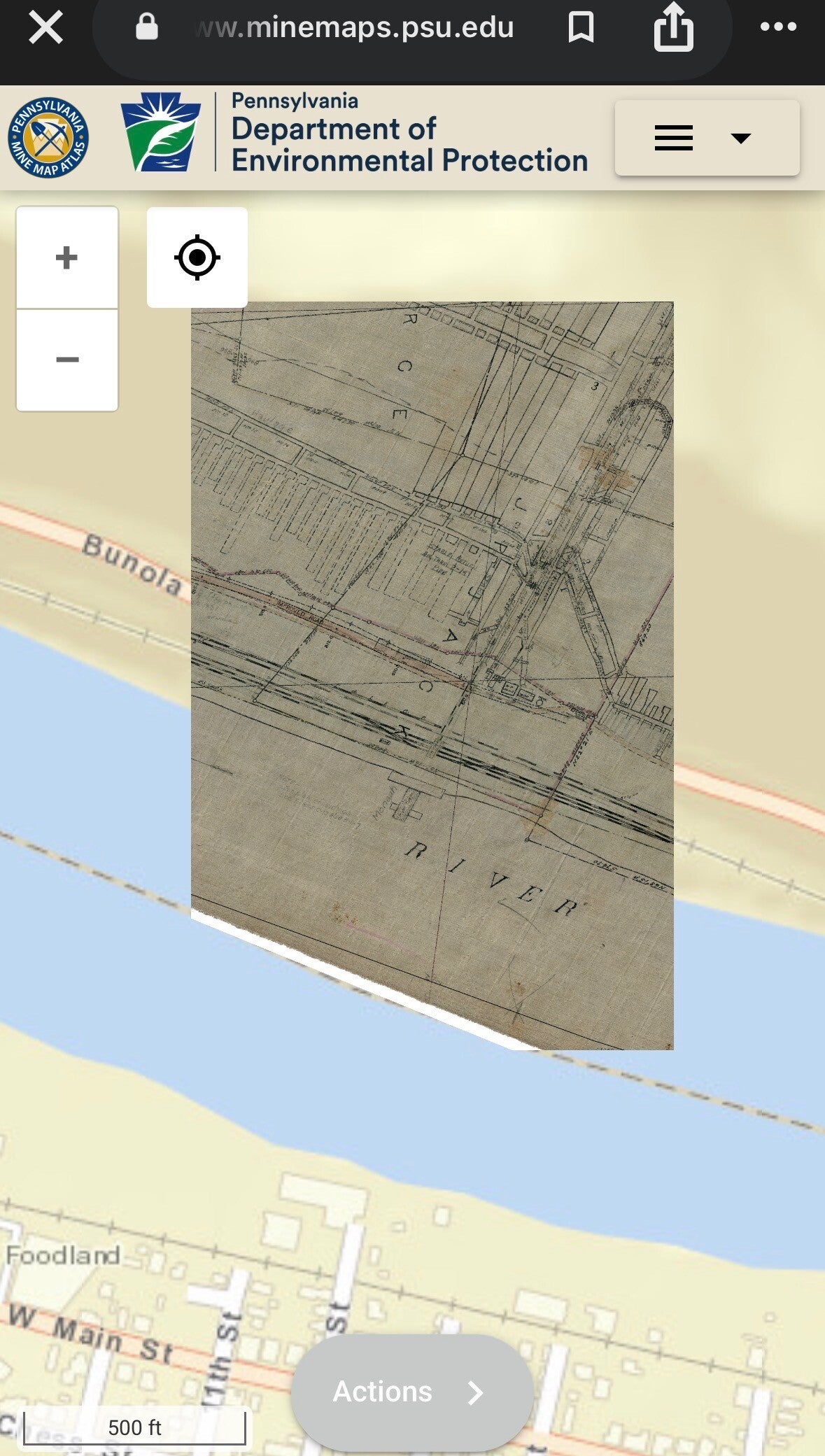
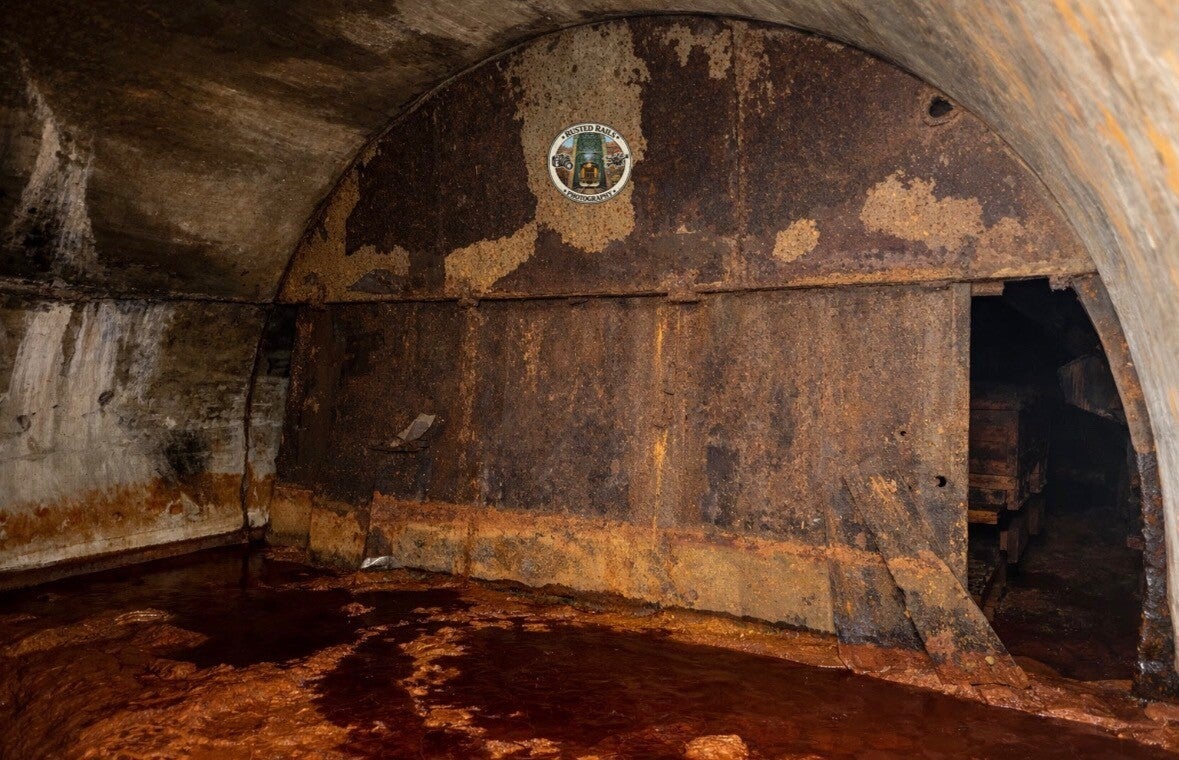
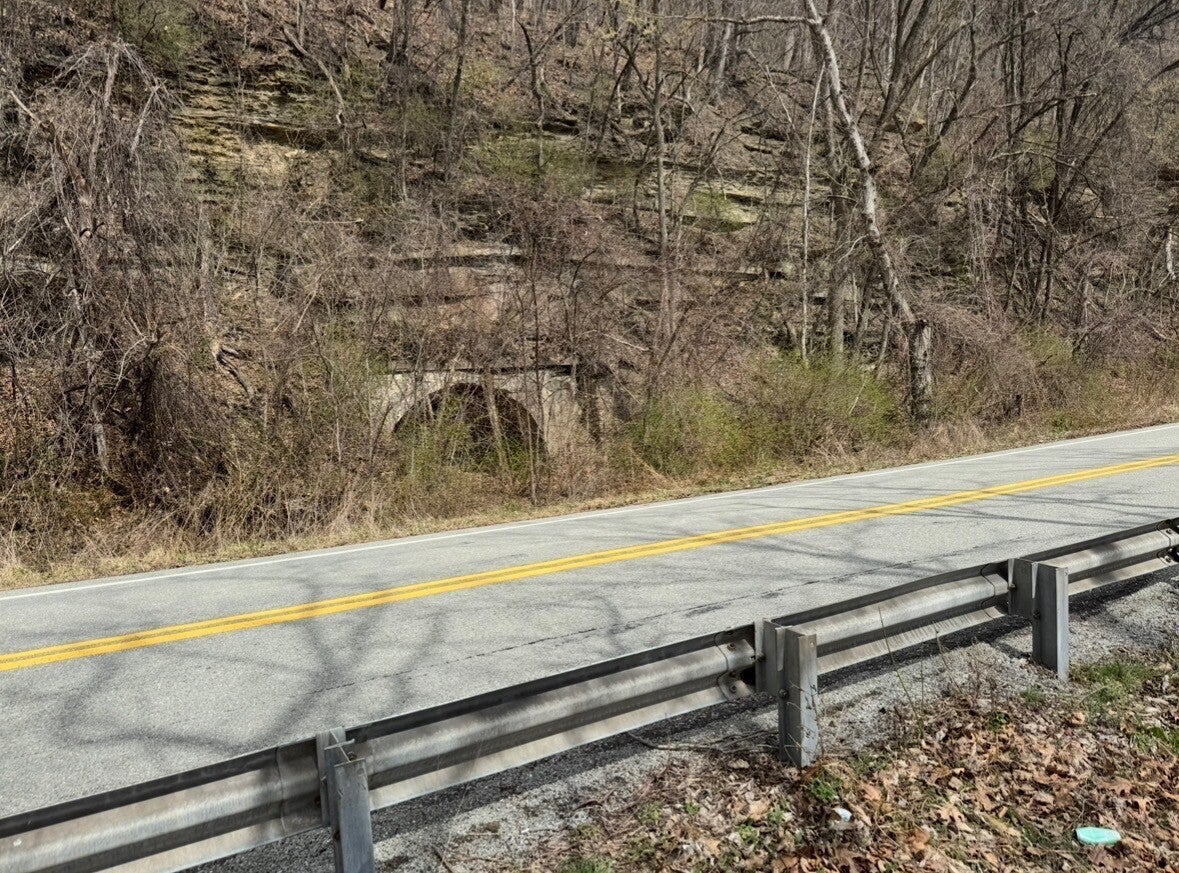
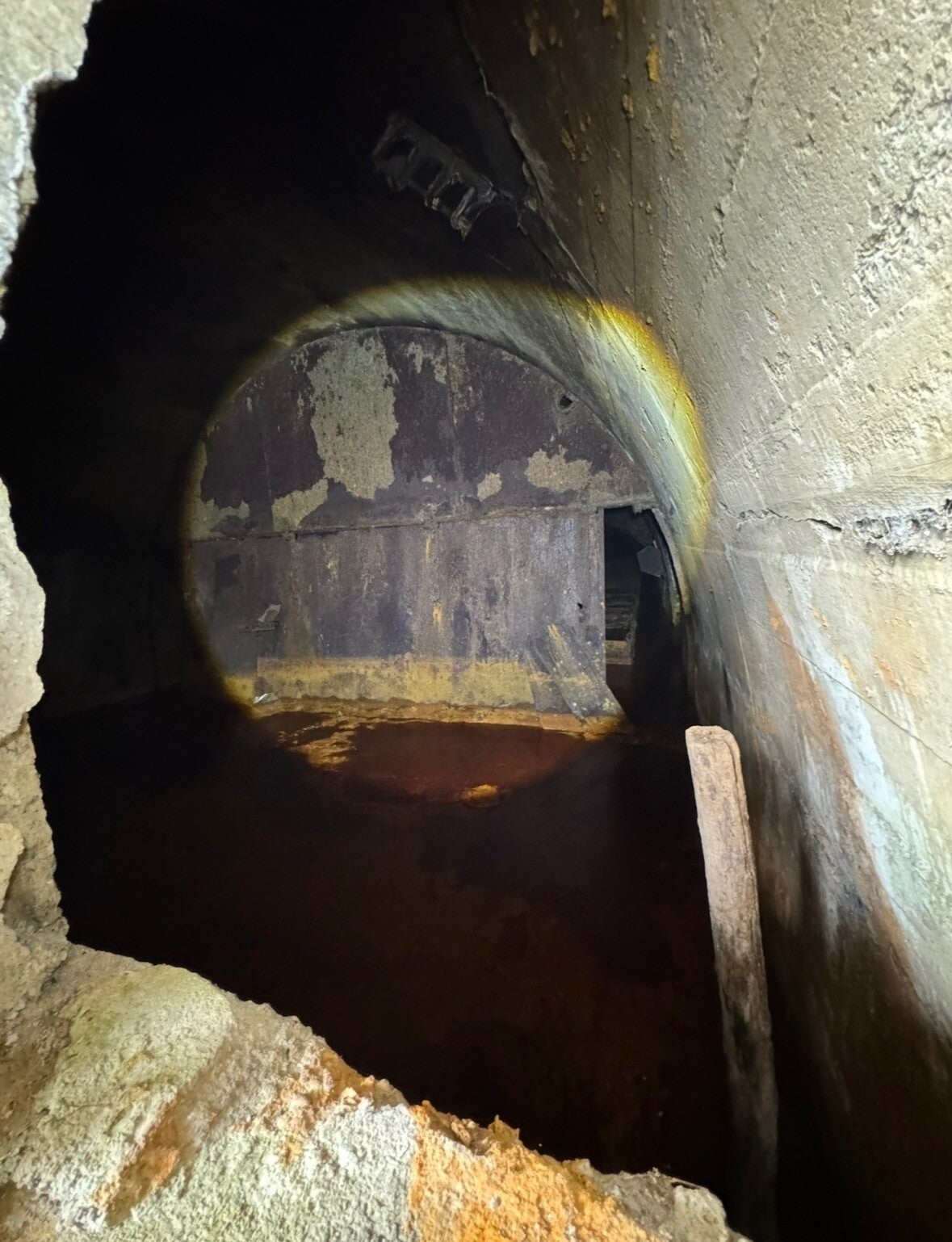
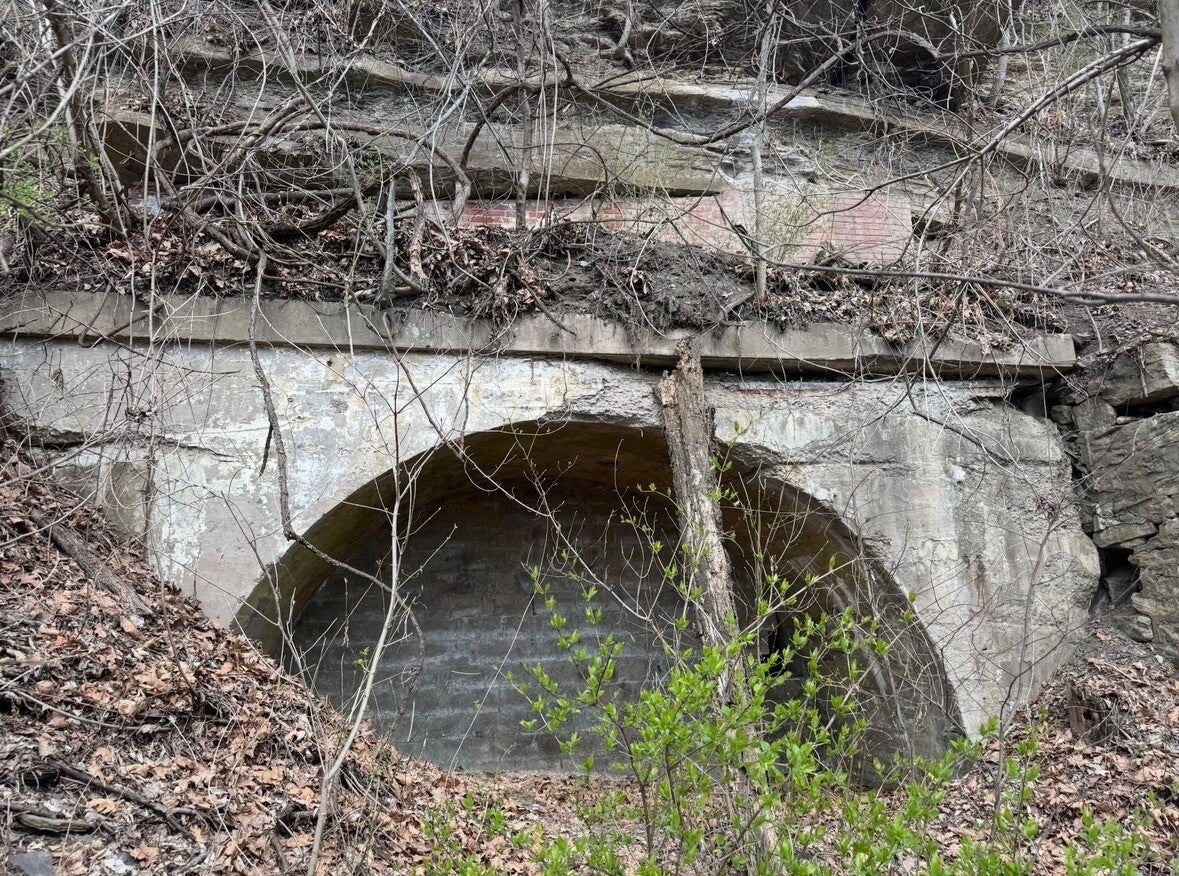
There as mine portal from a long inactive coal mine along Bunalo Run Road. There is a slight pull off along the opposite southbound moving side of the road nearby the bricked over portal. Upon the entry of the mine there is a small punched out brick that allows for a shot inside.
I wish I could find out what is behind that bulkhead, but I think that water is deep and super toxic. The air coming out also smells bad.
Darr Mine Disaster Site in Van Meter
These are all that remains of the Darr Mine tipple, manway and main haulage.
On December 19, 1907, a devastating explosion ripped through the Darr Mine in Van Meter, Westmoreland County, Pennsylvania, taking the lives of 239 men and boys. It stands as the worst coal mining disaster in Pennsylvania history and devastated the surrounding Youghiogheny River Valley, leaving over 130 widows and hundreds of children without fathers. The disaster occurred during December 1907—the deadliest month in American mining history—and hit the region's immigrant population particularly hard, as a large portion of the victims were central European laborers, predominantly Hungarian immigrants.
Investigators determined that the explosion was ignited when miners carrying open-flame lamps entered a gaseous, coal-dust-heavy section of the mine. The immense loss of life at Darr Mine, coming on the heels of other tragic mine explosions that same month, shocked the nation and mobilized public demand for workplace safety standards. The tragedy proved to be a major catalyst for legislative safety reforms, the elimination of open-flame lamps in hazardous shafts, and the eventual creation of the federal U.S. Bureau of Mines.


Hometown Neighborhood Abandoned Coal Mine
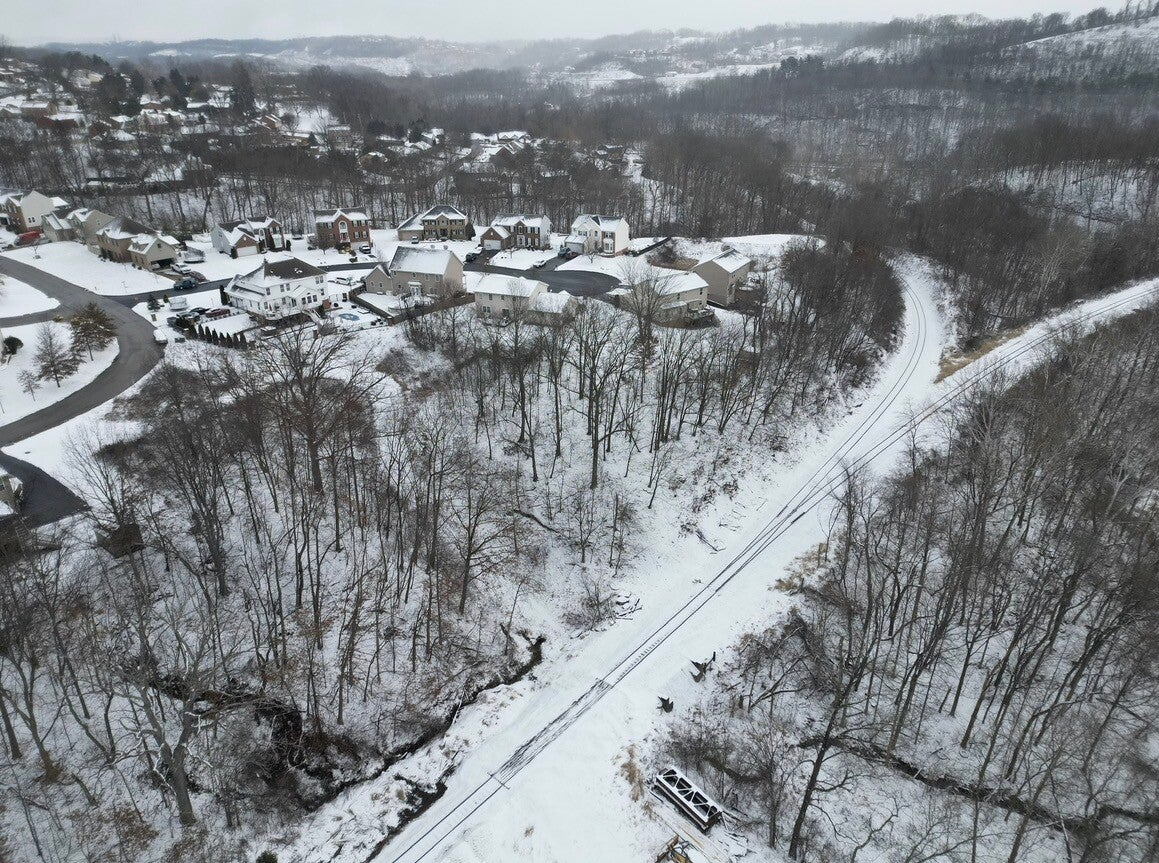
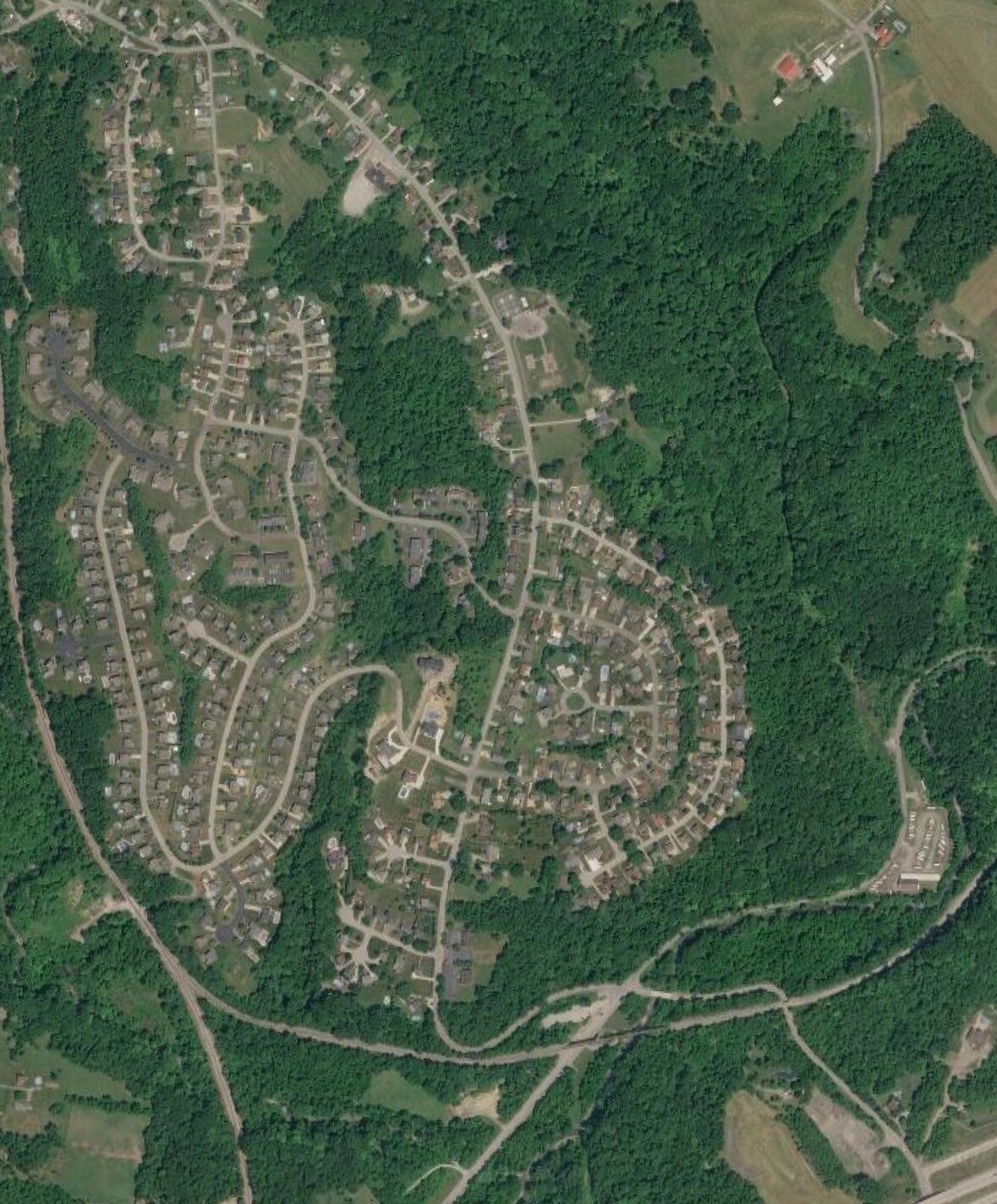
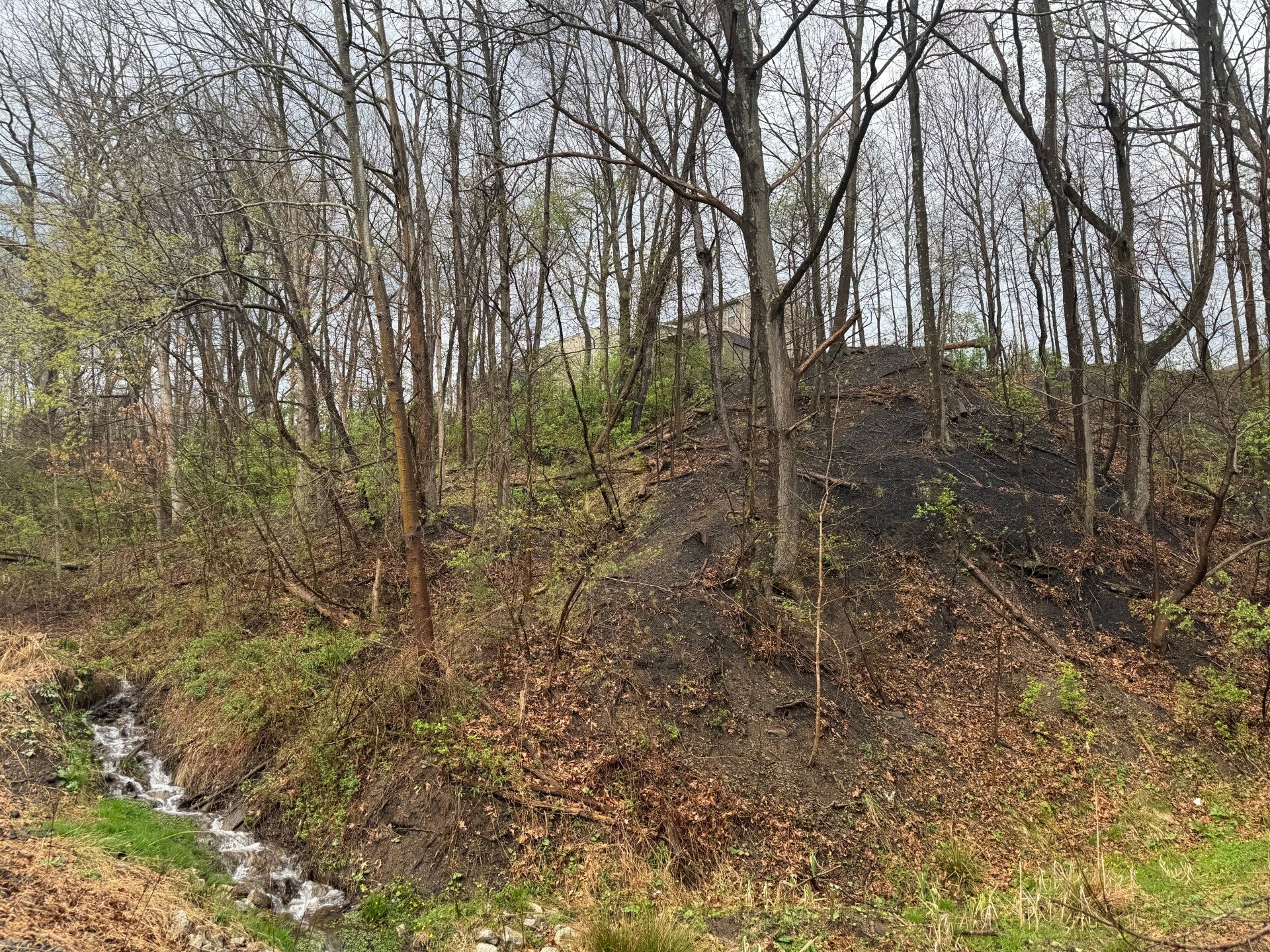
Located in Jefferson Hills, Pa under the neighborhood where I grew up lays a long abandoned long forgotten coal mine that I am pretty sure few residents even know of nowadays and why would they, it is pretty well hidden.
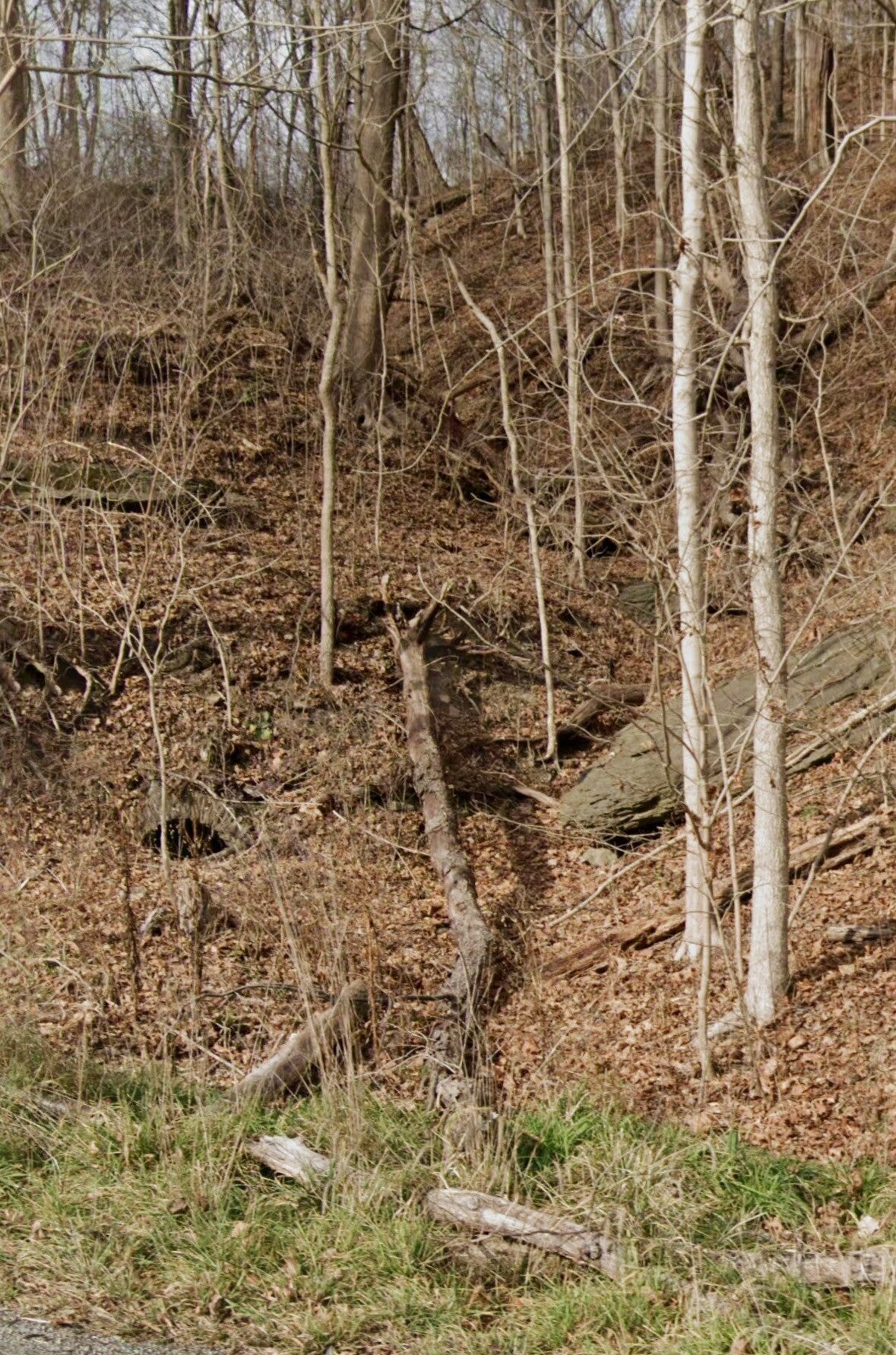
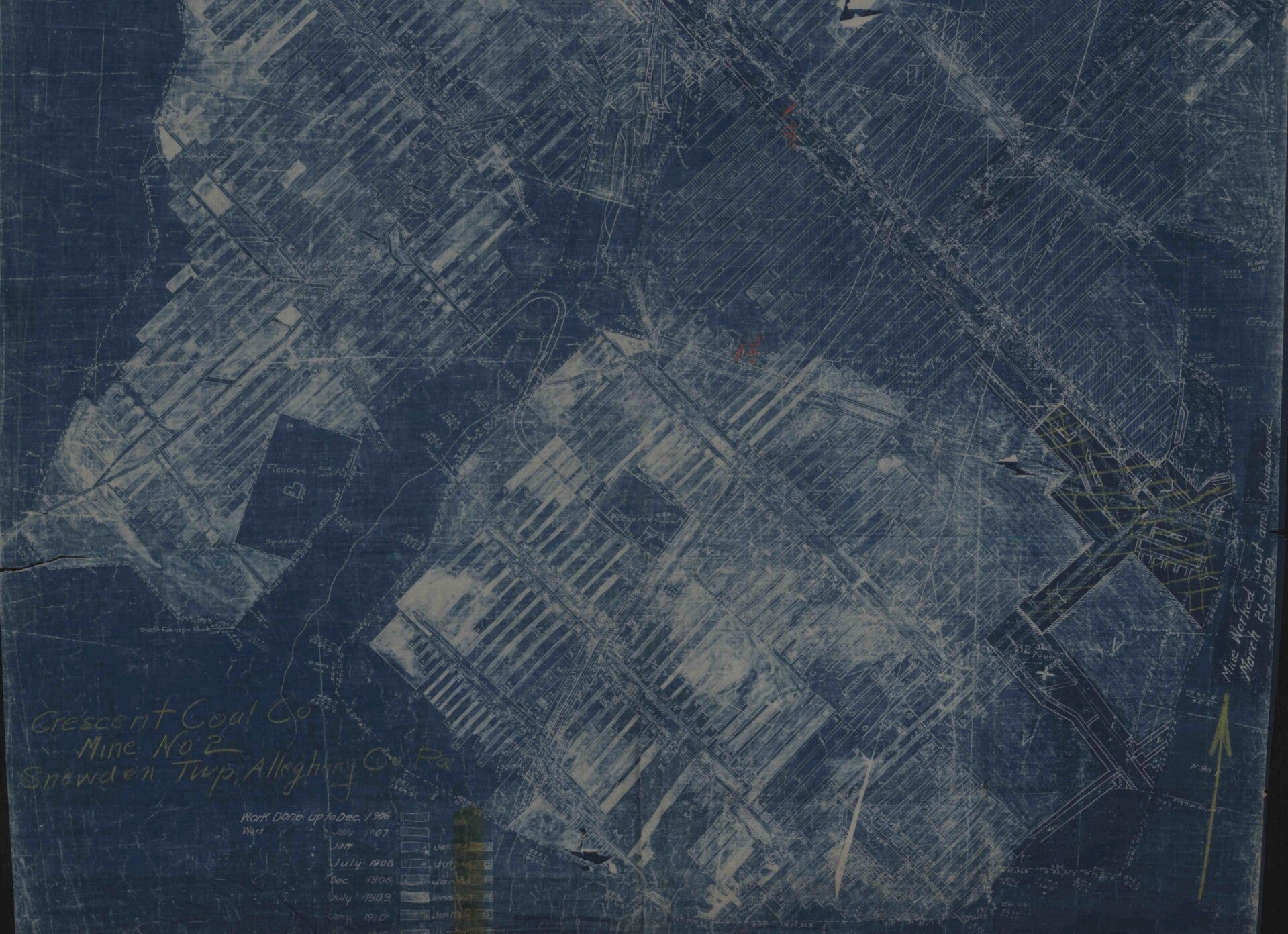
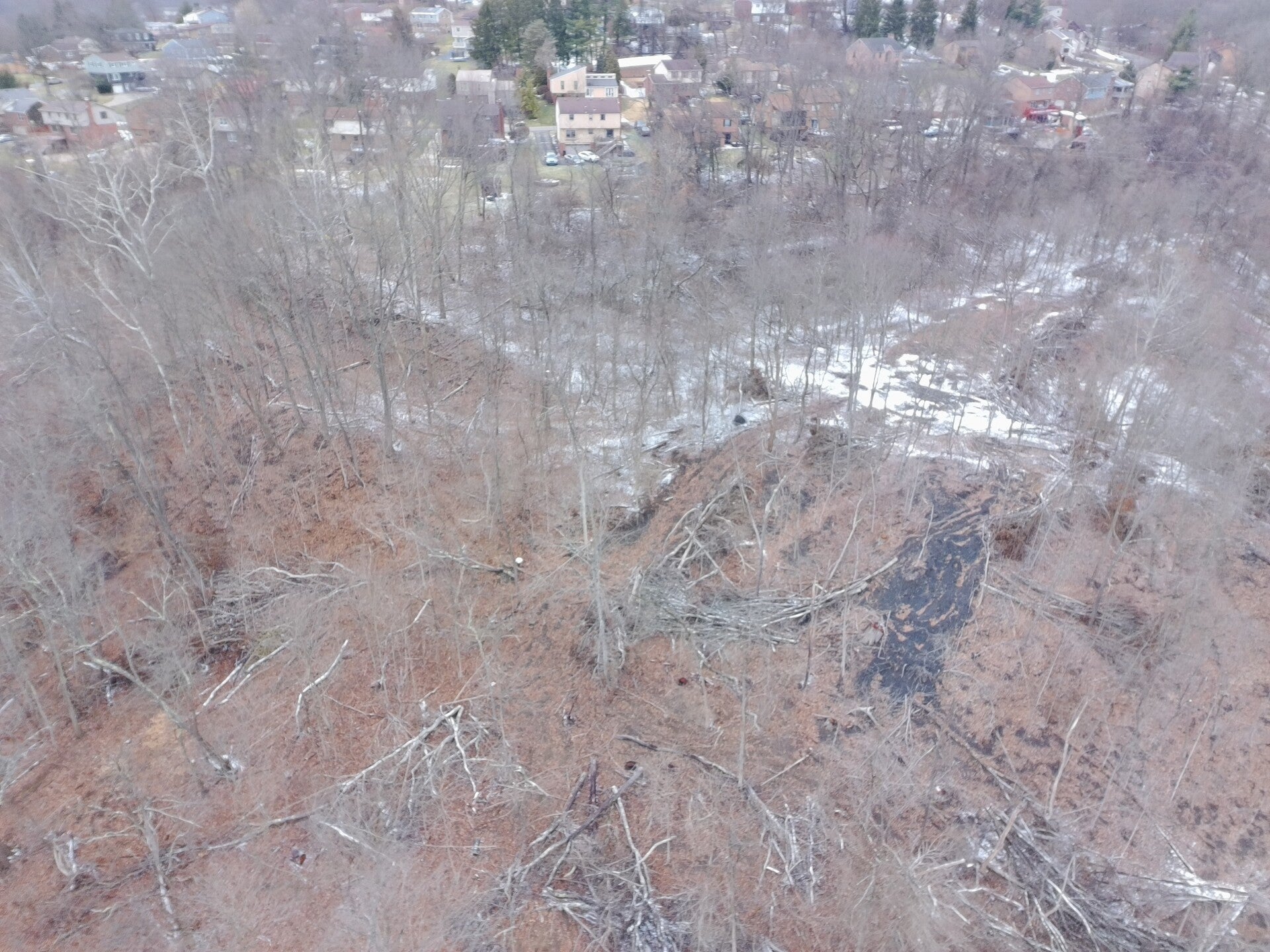
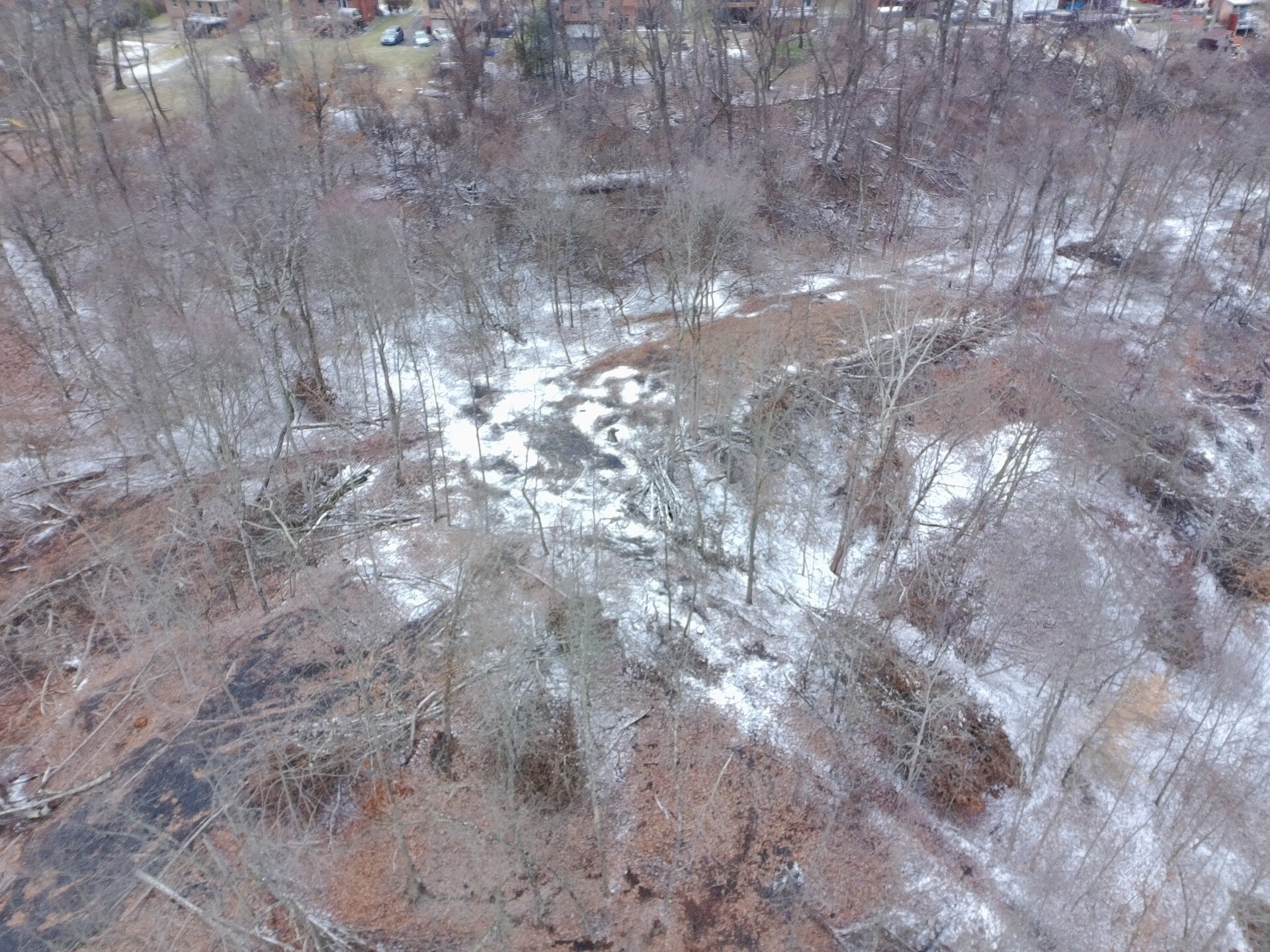
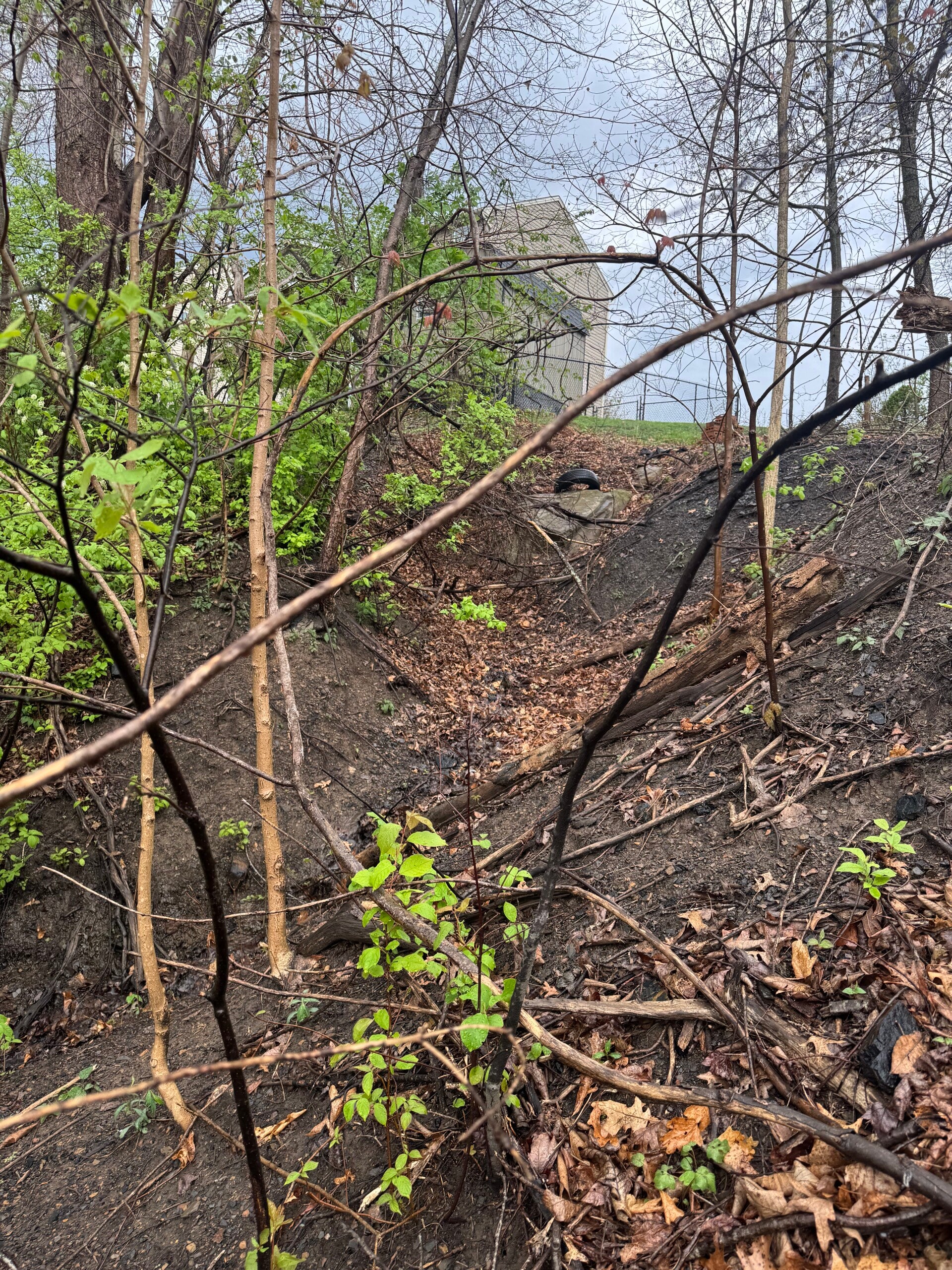
Crescent Coal Co. Number 2 Mine abandoned in 1919 was always revealing small hints to its buried portals, manways and the tipple sites while I played around in the woods below the exterior of the neighborhood. There are a few give aways I can point to with photos where anything is visible.
Key Give Aways:
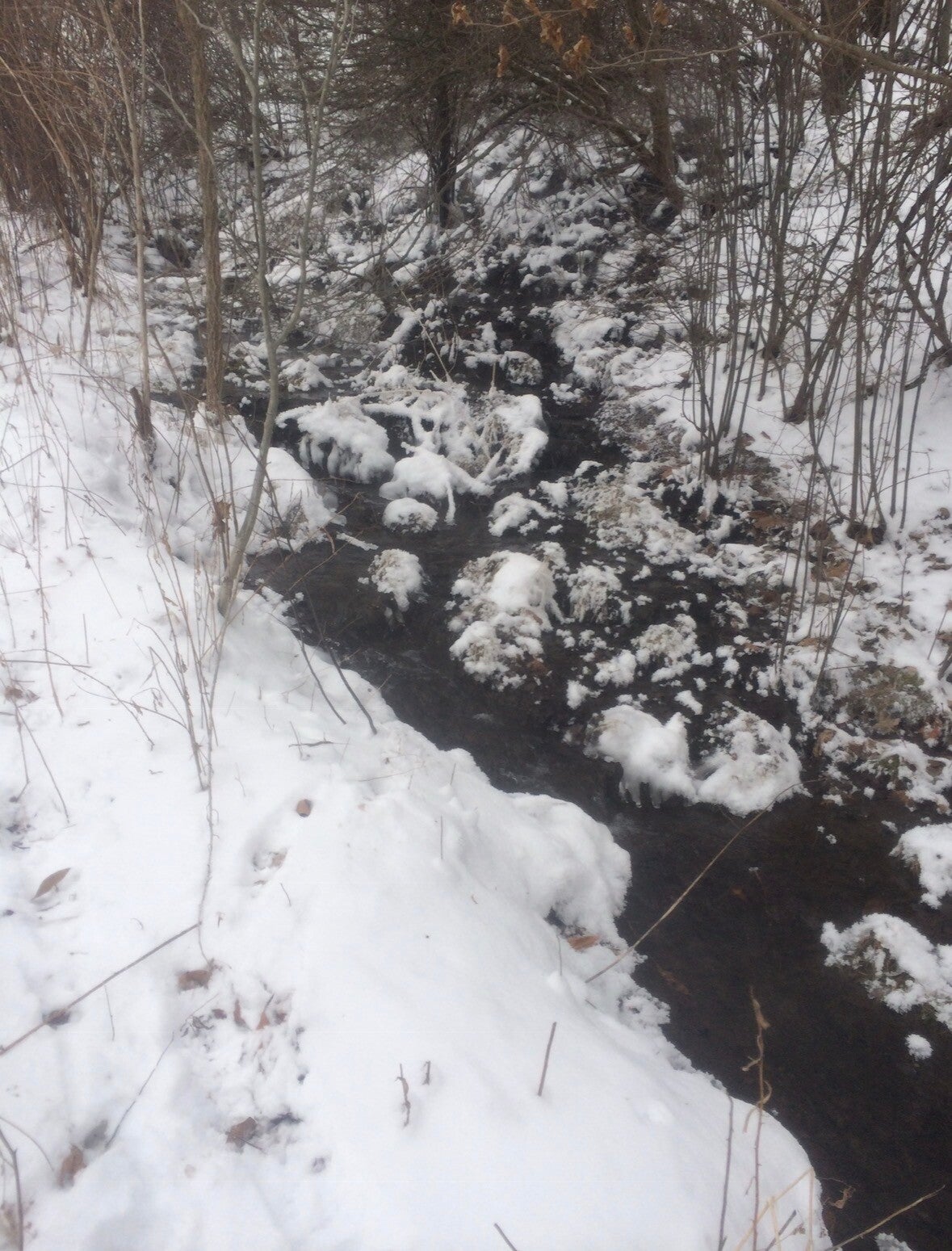
- Constant watershed year round with occasional orange water.
- Concrete pylons sticking out of the dirt.
- Slate dumps
- Good sized to large pieces of bituminous coal all over near stream outlets.
- Concrete archways that the borough attempts to hide or have buried.
- Suspicious piles of rocks leading into darkness as well the spaces between the rocks carries a strong air current and slight drainage.
- Old photos of wooden structures at these sites from befor the development was built which I have mostly lost. They may have been from a local fb group.
All these line up to the map of the mine and the areas that I have explored on foot many a time for many years.
On the other sides of the valleys from which I lived there were 4 more examples of completely separate long abandoned mines with similar types of give aways, some even more obvious than this one.
Model Trains
O Scale Conemaugh and Black Lick Railroad 111 & 2000
Handcrafted and meticulously painted, each model features my own custom decals in O scale. One is an SW-7 and the other, an NW-2 locomotive. Both are powered units, designed with intricate attention to detail that showcases the limits of my printer and craftsmanship. I took these two models to the 2025 Railfest at the Western Maryland Scenic Railroad and the C&BL shops, capturing them in photographs at the locations where the original locomotives once operated.


Conemaugh and Black Lick Railroad Bicentennial & Others
Conemaugh & Black Lick 76 decals are available, along with a range of other numbers. You can request designs for Y2K, 111, 104, 51, 100, 101, 2000, and any other Conemaugh & Black Lick locomotive. Please see the list of their numbers below. I navigated the learning curve of Corel Draw 2025 to create the logos and lettering for each photo/file included below. I can share the file so you can upscale and downscale the designs below as well as vectorize them.


Other Railroad Decal Designs
More decals that I designed for projects that I thought I may do. Wheeling & Lake Erie, Carload Express Co, Turtle Creek Industrial Railroad, Pittsburgh Allegheny & McKees Rocks Railroad, and Pittsburgh & Ohio Central Railroad.
I navigated the learning curve of Corel Draw 2025 to create the logos and lettering for each photo/file included below. I can share the file so you can upscale and downscale the designs below as well as vectorize them.

Accidental Shipping Damage & Modeling Plans
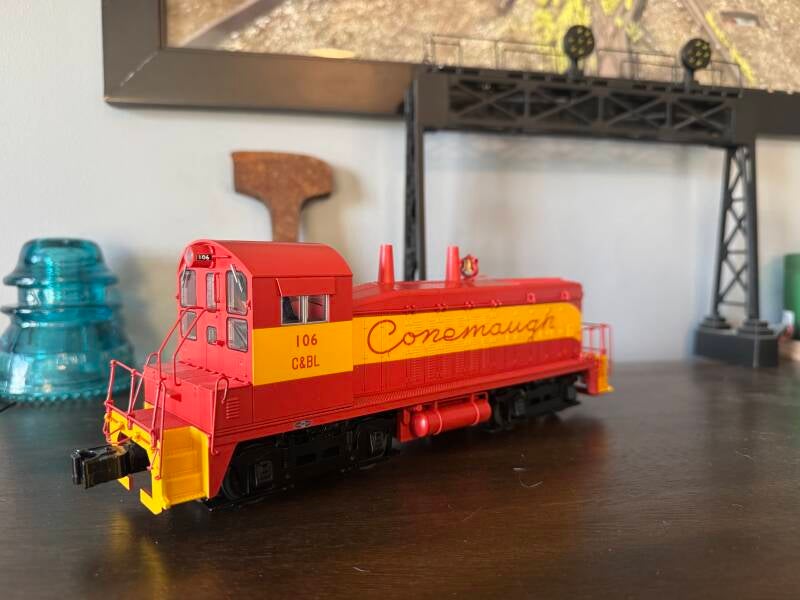
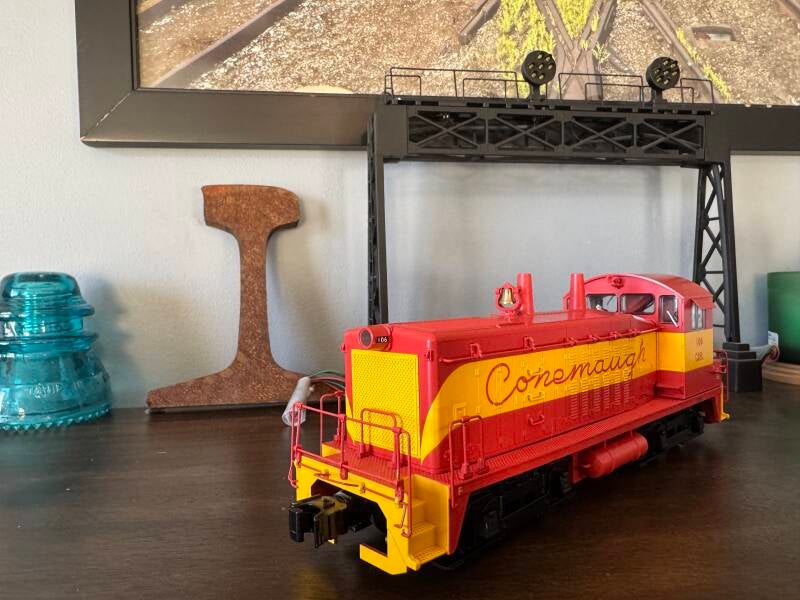
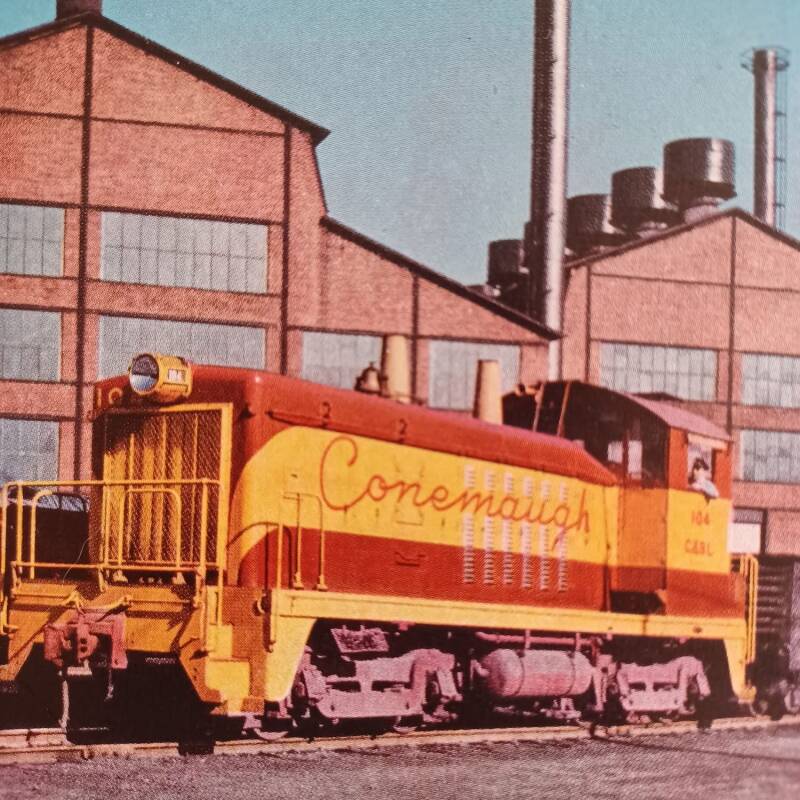
A few days ago as of 02/21/2026 I had ordered and opened an O scale Lionel train Conemaugh & Black Lick 106 to be specific. C&BL 106 is an Sw7 locomotive pained by Lionel Trains to wear the 1st paint scheme that the small Bethlehem Steel owned railroad once wore. Finding pictures of these vintage paint schemes can be quite a challenge. During that era, Johnstown, Pennsylvania, offered limited accessibility for railfans to document the operations. While there were a few spots for capturing images, much of the city was dominated by steel mills, making it difficult to get a glimpse of the rail activity without having to get inside access.
I figured I would work on repairs to 106, I put the cab back on with more sturdy screws. I am currently looking for ways to patch a crack that runs through the hard plastic on one side.
Once 106 is repaired, I plan to create decals for Conemaugh and Black Lick Railroad 76 an old bicentennial unit. There are known decals or existing models of 76 for me take notes off of. I've been struggling with drawing the sloped lines on the nose of the switchers. Additionally, there are few pictures of this paint scheme available, and the old photographs lack the detail I need to properly paint the sloped line on a little Conemaugh and Black Lick switcher like 106 or 76.
The first three photos were captured by me. The fourth photo was provided by Dan Cassata from a Facebook group, with the photographer and date remaining unknown. The fifth photo is courtesy of the Jackson Township Historical Preservation, also featuring an unidentified photographer.

Reading Blue Mountain & Northern 2003 Rebuild
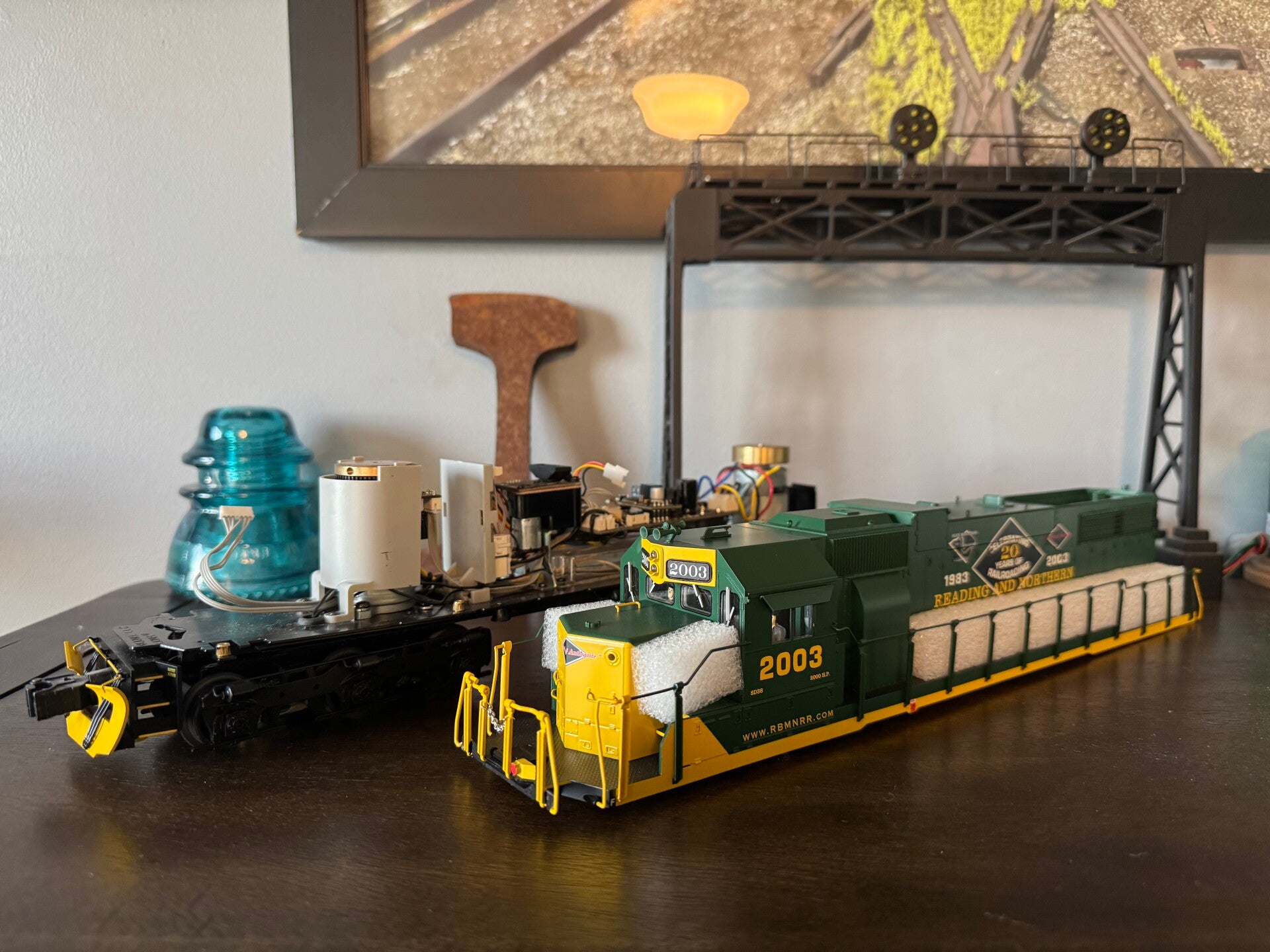
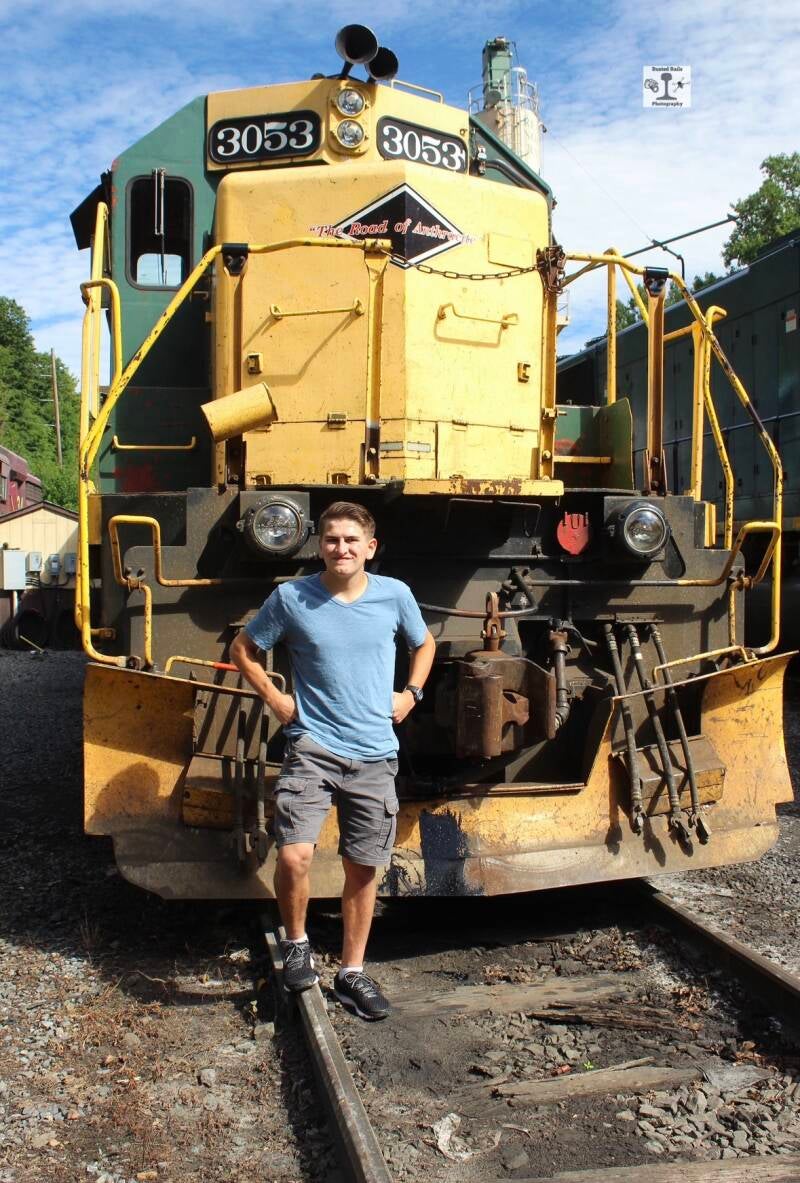
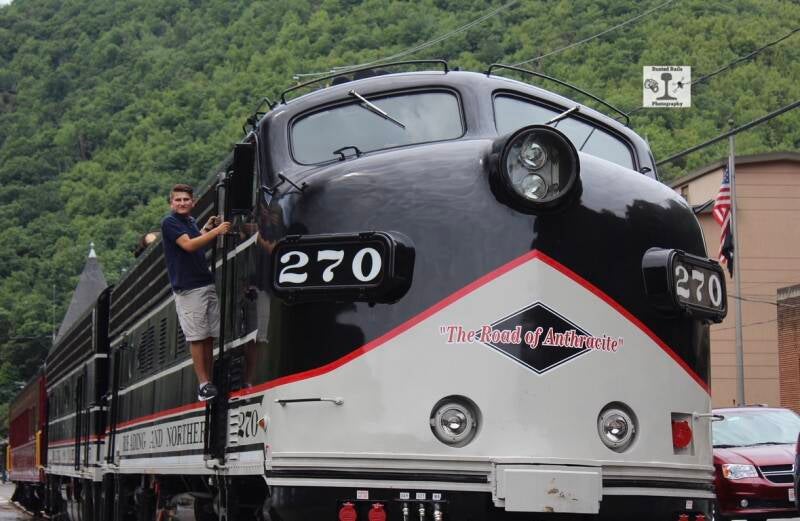
In 2020 I had decided to go on a road trip to North East Pa to go to Steamtown NHS and get my senior pictures with RMBN locomotives. I bought an o scale powered Lionel train ( RMBN 2000) to take with me and use it as a prop in my pictures. In the months leading up to the trip I kept the train up high on a shelf paired with another o gauge train, so high up I thought it was safely kept away from our family's cats.
It sat there for 3 moths uneventfully until spring where one day came back from school or work and found the 2 trains on the floor with one of them of course the one I needed for the photos had its body shell completely demolished and the other missing it's windows, a ditch light and a horn.
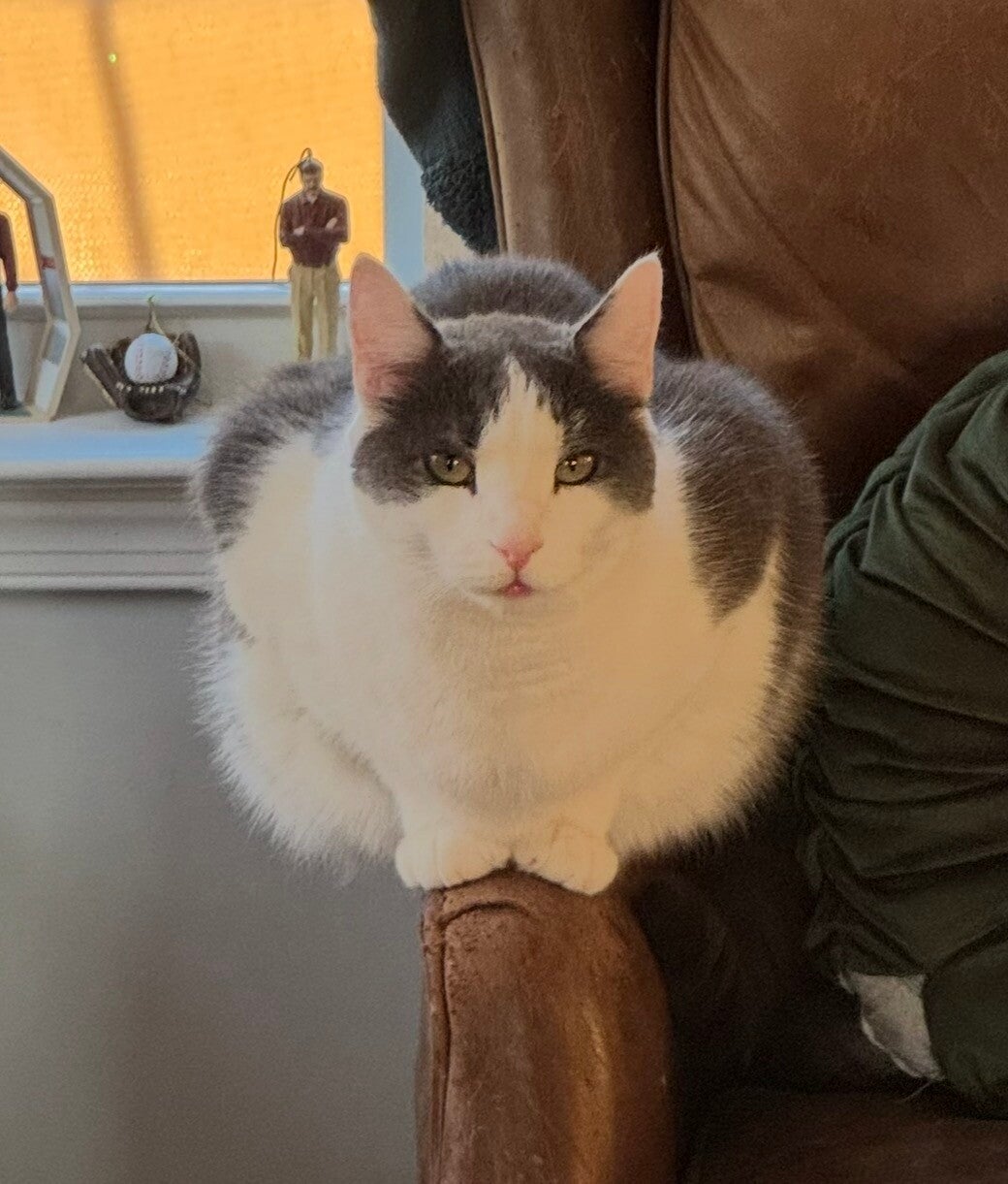
I knew which cat did it, my cat. One of our cats could not yet jump, one doesn't like being up high as it is likely afraid of heights and my personally owned cat, a is every sense of the word, he had never cared about counter surfing much less up high up. generally he does nothing but slump around all day exempt for when the automatic feeder goes off.
My cat stares at me while I am working on 2000s replacement. I know he sits quietly knowing darn well that I know that he knows that I know that he is the cat who destroyed a pristine model train and nearly stopped me from going on a road trip and there is nothing I can do about it.